Taxes on Essential Products: Bringing The Debate Back to Where It Matters

Originally appeared on Colombo Telegraph, Citizen.lk, The Morning, Lanka Business Online and Daily Mirror

By Aneetha Warusavitarana

Sri Lanka’s exorbitant taxes on sanitary napkins had the media spotlight over the last few weeks - this is not a new issue. In 2018 the total tariffs on sanitary napkins was over 101.2%.  Since then we have seen some progress, with the tax being reduced from 101.2% to its current rate of 52%; a result of several tax revisions.

The 2020 budget revised down general duties for sanitary napkins to 15% and introduced a CESS tax of 15%, causing an uproar in social media and in parliament leading to fresh calls for the abolition of these taxes.  

Menstrual hygiene products are essential for girls and women, and this issue has put the interests of these consumers who want more variety and cheaper products against the interests of the local producers who want larger margins. Since the initial uproar last week, there have been claims that the local brands account for 95% of the local market and therefore import taxes do not have a bearing on the market price.  

Bringing the debate back to where it matters: impact on women

It is clear that for this issue, policy decisions have to be taken with the best interests of the consumer at heart - in this case, the millions of menstruating women. 

At the most basic level of analysis, when protectionist tariffs are placed on a good, it is the consumer who loses out. The tariffs will achieve two things: they will limit the range of products that enter the domestic market, and they will raise the prices of both imported products and locally manufactured products. How so? The inputs into the local production process are also taxed, which raises production costs, and therefore raises the final price of the locally manufactured product. Additionally, the tariff raises the price of the imported product, which allows local producers to raise their prices and keep substantial margins. In other words - tariffs cause both the locally produced goods and the imported goods to be sold at a higher price. 

These tariffs are also keeping more affordable options out of the market. At the time of writing, locally manufactured products can range in price (per pad) from LKR 11 to LKR 19. However, cheap imported alternatives are not available. For example, Indian supermarkets have products at the equivalent of LKR 5. The tariffs may not be deterring higher-priced imports from entering the market, but it could be possible that this is happening with more affordable imported options - it makes little sense to bring in a cheaper product if the tariff raises your costs to the point where you have to price the final good at the same price point as your more expensive product.

Will removing the tax only affect high-income earners?

An argument leveled against the removal of the tax has been that imported products are often out of reach of the average Sri Lankan woman, and as such has little relevance as a policy decision. This argument has also been coupled with the statement that as locally manufactured products exist, and women do purchase them - why should we care about bringing in imports? 

The example provided above makes it clear that removing the tax would actually bring more affordable products into the market. This is also where the importance of choice comes to play. Each woman will have different requirements at different points in their life. This is compounded by the fact that menstruation is often accompanied by pain and discomfort, which can range from mildly annoying to debilitating. In short, one size does not fit all when it comes to menstrual hygiene products. In response to this fact, the global industry has innovated - period cups, period underwear, reusable pads and more. These tariffs should be removed, and Sri Lankan women should also be given access to these choices. 

Economic Rents

By now it should be clear that there is only one winner, and it is not the millions of menstruating women. The basic explanation of the impact protectionist tariffs have is that they serve to benefit local producers, that are few in number. They shield them from the competition and allow them to price well above marginal costs. A classic case of ‘rent-seeking’ behaviour, where a company lobbies to secure itself protection in order to charge a higher price. The result is that the local consumer loses out. 

There is one area where the producer's complaints do have merits - that is the tariffs placed on their inputs.  Much of the input that goes into the production of sanitary napkins are also taxed.  The government should look into reducing these costs to help the local manufacturers stay price competitive.  

Given this, there is a clear call to reform - prioritise the requirements of women, and remove the taxes imposed on the final good and on the inputs into the production of these goods.

Aneetha Warusavitarana is the Research Manager at the Advocata Institute and can be contacted at aneetha@advocata.org or @AneethaW on Twitter. Learn more about Advocata’s work at www.advocata.org. The opinions expressed are the author's own views. They may not necessarily reflect the views of the Advocata Institute, or anyone affiliated with the institute.

Unlocking Potential of Micro and Small businesses Essential for Post-COVID Economic Recover

Originally appeared on Ceylon Today, Economy Next, Colombo Telegraph, The Island and Daily FT

By K.D.D.B. Vimanga

Sole proprietorships account for 63.1% of businesses in the country and account for 27.1% of national employment (Annual Survey of Industries, Department of Census and Statistics). Their contribution to the local economy is significant and lockdowns due to the COVID-19 pandemic have had an adverse impact on these small businesses.

At present, it is difficult to estimate how many small businesses would be out of business, but given that the department of labour has estimated (from a survey of 2,764 establishments) that 52.15% or 764 of firms, employing under 1 to 15 employees have closed down, it is likely that small businesses have also been hit hard.  

However successive Sri Lankan governments have failed to strategise on the potential of these enterprises to Sri Lanka’s economic development. Emerging markets such as Vietnam on the other hand have been able to capitalise on the potential of these businesses to accelerate economic growth.  

Any hope of inclusive economic growth for Sri Lanka’s post-COVID recovery can only then be achieved if we utilise this sector, unlock their potential and empower them to grow, compete and thrive. While there is a lot of work to be done in terms of policy reform in this area, there are a few low hanging fruits, namely re-hauling the business registration process, and bridging the digital divide. 

In the form of a multi-part series, the Advocata Institute in partnership with LIRNEasia will provide an in-depth analysis of these two vital policy tools to empower Sri Lanka’s small businesses. 

Sri Lanka’s business ecosystem:

According to the listing operation of Economic Census conducted in 2013/ 2014 the number of SMEs in Sri Lanka, most of which are categorized as sole ownerships, account for 1,019,681 of which 71,126 are small enterprises and 10,405 are medium scale enterprises.  This number only represents enterprises that have registered under the above criteria. However, according to the same survey, there are 3 million people who engage in a similar SME related industry, trade or services. 45% of the micro-enterprises and 10% of small enterprises remain unregistered. Overall, 42% of business establishments remain unregistered while 25% of these establishments are run by women entrepreneurs. In other words, informality is still high. 

According to a survey done by LIRNEasia, 40% of SMEs reported using the internet or social media for business; much of this use was limited to information seeking, rather than transactional use. Those who used the internet for business thought that access to the internet is either important or very important, while those who did not use the internet remained unconvinced of its benefits: most said there was ‘no need’ to use the internet. Few SMEs were capable of taking any form of card payment at the time of the survey, and the majority of SMEs did not use mobile money services. This research points to a serious digital divide restricting the potential of Sri Lanka’s small businesses. This would be tackled comprehensively during next week’s Op-Ed outlining the serious implications of the digital divide.  

So what is the problem?

Let’s look at it through the experience of a micro-entrepreneur. Chitra. She runs a string hopper stall opposite her village fish market and her story is similar to that of three million people who engage in an SME related industry, trade or service. Her business remains unregistered. She does not use any digital technology. Because she is unregistered, she cannot go to a bank and get a low-interest SME loan or even apply for the recently introduced Saubagya COVID-19 renaissance facility.

Reforming the Business Registration Process

So what must be done urgently is to simplify our business registration process. At present, the business registration process is implemented by the Divisional Secretariats. In contrast, the Business Registration process for companies under the Companies Act No. 7 of 2007 are streamlined through an online registration system called the e-ROC. However, this does not benefit small businesses who classify as sole proprietors and partnerships and is therefore regulated at the Divisional Secretariat.  At best we have about nine different regulatory processors for the registration of sole enterprises and partnerships. Typically, an entrepreneur like Chitra would have to visit the Divisional Secretariat, collect and fill forms, provide documentation such as proof of premises ownership such as deeds, or rent agreements, tax assessments etc. Then she would have to visit the Grama Niladhari and get the documents validated. She might need other approvals as per the request of the Grama Niladhari before she hands over the final forms to the Divisional Secretariat. A more effective method would be to have an online system. As implemented by New Zealand and Hong Kong, the applicant must be able to submit the form (available in all three languages) online on the Divisional Secretariat website, pay the business registration fee online or at a bank and receive the business registration the next day without the requirement for numerous signatures or documentation of ownership (the company registration process does not call for the original deed or proof of ownership, so why should a small business?). Then an entrepreneur such as Chitra can easily go to the nearest communication fill the forms, upload the deposit slip and get her business registration done with ease. 

Therefore, in practice, what has to be done is establishing an e-registration system which can be availed of by small businesses. The Ministry of Industries must play an active role in setting up the online platform in partnership with Provincial Councils. Secondly, the requirement for unnecessary documentation (proof of ownership, grama niladhari approval, etc.) has to be amended at the provincial council level.  Implementation of these two policy recommendations would significantly empower small businesses to get registered. 

Conclusion

Sri Lanka needs to urgently capitalise on the potential of MSMEs. Creating growth and productivity in the small business sector is an investment on our wider economy. This is not an easy task; however, mobilising synergies and bringing in much needed regulatory reforms such as making the business registration process simpler and secondly bridging the digital divide.

K.D.D.B. Vimanga is a Policy Analyst at the Advocata Institute. He can be contacted at kdvimanga@advocata.org. The Advocata Institute is an Independent Public Policy Think Tank. Learn more about Advocata’s work at www.advocata.org. LIRNEasia is a regional digital policy and regulation think tank active across Asia. The opinions expressed are the author’s own views. They may not necessarily reflect the views of the Advocata Institute or LIRNEasia.

Policy instability is as bad as political instability

Originally appeared on The Morning

By Dhananath Fernando

The Govt. must start pulling the economy in one direction

We are just over five months away from the 25th anniversary of Sri Lanka’s 1996 Cricket World Cup victory, which is still engraved in every Sri Lankan’s mind. Since then, our players have gone on to break world records and build legendary careers. They have been named in many Greatest XI lists and represented all the major cricket leagues around the world. Therefore, it is clear the quality of our cricketers has improved in leaps and bounds over the past quarter of a century, and we even secured a T20 cricket World Cup in 2014.

However, cricket’s greatest prize has eluded us since 1996 so it is interesting to re-evaluate the contributory factors of the 1996 victory. It is my belief those key takeaways will provide us with some insight on strategies to overcome the current economic storm. There are many elements and ingredients in mapping out the winning formula. However, I see two main contributory factors.

First is the “stability of the team”. Second is a combination of all other factors along with the cricket administration, which I like to call cricket-political stability, or “crickelitical stability” if you will. The 1996 team was not a star-studded team. Most of them became stars after playing the World Cup, including Sanath Jayasuriya, Muttiah Muralitharan, and Chaminda Vaas. It was the above two factors that made them world champions, which have unfortunately remained unattainable to Sri Lanka, even following 25 years of advanced investments and resources.

In an economic context, similar to the cricket team, “policy stability” and “political stability” are both extremely important. Sri Lankans have never had the luck to experience the joy of a World Cup victory in economic terms. This can be mainly attributed to Sri Lanka’s excessive focus on political stability rather than policy stability. The economic equivalent to a World Cup victory in the Sri Lankan context would be achieving lower poverty rates and reaching a GDP per capita of above $ 10,000. This, in my opinion, remains an elusive dream. Over the years, the business community and policy analysts have been highlighting the importance of policy stability and consistency, but we have failed on both fronts.

Lessons from the previous Government

Initially, the last national Government had a two-thirds majority in Parliament. However, policy stability was non-existent. Different parts of the Government functioned with opposing views which resulted in public policy being pushed in two opposing directions. This filtered down to all levels of government.

The then Prime Minister’s policy statement and the Budget Speech by the then Finance Minister prioritised two different policy agendas. Significant salary hikes for the public sector which were not affordable to the state balance sheet, and revising the VAT (value-added tax) rate several times, are a few examples of policy inconsistency. The Vision 2025 policy statement which was the main policy agenda of the Government, was released a considerable time after taking over office. Moreover, in implementation, it was not given equal priority by all sections of the Government. The Cabinet Committee on Economic Management (CCEM) was then replaced by the then President with the National Economic Council (NEC), which was later dismantled by the then President himself. This resulted in a major setback, since important policy decisions took place without sufficient deliberations, thereby leading to further policy inconsistency within the Government. 

Cabinet reshuffles on key portfolios were observed a few times. The constitutional crisis that emerged with the appointing of a new Prime Minister was a key highlight of the island’s policy instability. It goes without saying that this level of instability and inconsistency is beyond the capacity of a small economy in the Indian Ocean. Policy stability and consistency is something that cannot be achieved only at the top level. Consensus between political leaders executing government functions in order to get something done is political stability. The policy implementation team and the execution of those decisions have to fall in line with the policy. It is only then that we can achieve policy stability.

There are so many things that can get held up at the lower level, starting from misplacing documents. This may have a significant effect on policy implementation, especially if we fail to get policy execution in line with the policy agenda. The World Cup victory in 1996 was a team effort where everyone contributed equally at all levels, from the team manager to the water boy. Another important element is political stability in Sri Lanka. This requires policy stability in the economic front, especially to overcome the current crisis.

Evaluation of the current Government: Post one year

In completing one year of being in power, the current Government should be extra cautious and re-evaluate their performance on realistic measures. The accuracy and relevance of their actions, policy consistency, and stability should be the Government’s priority.

Last week’s Economic Summit organised by the Ceylon Chamber of Commerce highlighted a few sentiments that are reflective of some elements of policy inconsistency.

The Governor of the Central Bank highlighted the importance of self-sufficiency with an emphasis on state sector-led development as a key strategy to support local industries to navigate these uncertain times. The Governor expressed his lack of interest in resorting to advice or support of any foreign agencies.

This statement was followed by a session where the Chairman of the Export Development Board (EDB) and Director General of the BOI (Board of Investment) emphasised on the importance of the Government simply playing the role of an enabler. They highlighted the importance of the private sector in driving economic growth and exports. Furthermore, they reiterated the importance of attaining know-how and capital through Foreign Direct Investments (FDIs). This, in their opinion, was the only way forward, if Sri Lanka is to seriously consider development.

For any economy to thrive there are few drivers that come into play. The ability of the people to connect with the economy and link with global production networks has become a fundamental necessity of the modern world. However, the question remains as to how we can achieve the above and if we will ever get implement the reforms to enable this.

From a public policy perspective, “self-sufficiency” stands in contrast to driving global trade, increasing exports, getting connected to global production networks, and FDIs. They are opposing policy outcomes. Having such opposing policy outcomes makes it difficult for a government to have a twin strategy to approach problems which are interconnected and it sends mixed signals to markets.

A common mistake of many governments that is attributed to their failure is their inability to consider the economy in its entirety. FDIs, exports, exchange rates, labour market, debt management, and all other factors of the economy are interconnected. If we fail to look at an overall picture and only target certain sections of the economy, policy instability will be inevitable. This in turn leads to a vicious cycle of political instability. Sadly, this has been Sri Lanka’s excruciating reality for a while.

This vicious cycle is precisely what this administration must strive to avoid.

In my opinion, getting the reforms done, expanding our connectivity to global value chains, and letting the private sector drive the economy is of paramount importance.

Policy stability goes beyond keeping the tax rates consistent or retaining certain sectors as priorities. It requires cohesiveness from all levels. Mainly at the implementation level where there has to be a continuous follow up between the different actors, while simultaneously keeping in mind the overall picture of the economy. It is about creating an ecosystem between sectors where all sectors work at an optimum capacity and level. The only way to do it is to allow the price mechanism to lead the market and let the resource allocation be done based on market prices.

If Sri Lanka is looking for a World Cup-winning era in terms of our economy, we must focus on policy consistency and stability, while maintaining political stability.


The opinions expressed are the author’s own views. They may not necessarily reflect the views of the Advocata Institute or anyone affiliated with the institute.

Not cost of living but quality of life

Originally appeared on The Morning

By Dhananath Fernando

The gentleman who cleans and repairs my roof every month is the breadwinner of a family of four, and a father to two children who are still schooling. He earns a living working for a company for an end-of-the-month salary, but it is paid based only on his working days. I often ask him: “How is life?” He always grins and provides me with the same answer: “On payday Rs. 5,000 is worth just Rs. 50. One week before payday, Rs.50 is worth Rs. 5,000.” 

I recalled what he said when recently, a Minister stated in Parliament that “the Rs. 5,000 was given for a month, not to be spent within a week”Things took an emotional turn following this statement and social media castigated him for being tone-deaf and being detached from ground realities. 

This makes complete sense from the receiver’s point of view. Rs. 5,000 is not adequate for a family of four! A simple calculation breaks it down as follows: Rs. 1,250 per person per month, which means about Rs. 42 per person a day, and about Rs. 14 per meal, even if the calculation is based on the rather broader and irrational assumption that the money is only spent on food.

According to the Household Income and Expenditure Survey by the Department of Census and Statistics, Sri Lanka’s mean household expenditure per month is Rs. 54,000.  In the estate sector, which is in the lowest part of the income pyramid, it is about Rs. 34,000. On average in Sri Lanka, food expenditure is Rs. 19,140 per month and even in the estate sector, it is at Rs. 16,890. This is according to data for the year 2016. Bearing this in mind, if we add 5% inflation every year, the expenditure must be significantly higher today.    

It is painfully obvious that an allowance of Rs. 5,000 is not at all adequate for a month’s expenditure. However, in defence of the Government, it was communicated that the Rs. 5,000 was not a stipend and is adequate for a month as a supplement for people whose livelihoods are affected. The Government reiterated that this was a form of financial assistance to help them keep their nose afloat in these trying times. It is no secret that the Government is running a massive budget deficit to the extent of 8.9% of GDP in 2021. Therefore, providing Rs.5,000 is also a challenging task, given the strained and limited financial resources. 

This points to just one conclusion; that nobody but poverty is to be blamed for the current circumstances. Sadly, as a country, we are in denial of this fact.   

Let’s look one step further. Our inability to tackle poverty is our own doing. We have failed over and over again, from one successive government to another, to set our fundamentals in the right direction. Unfortunately, we still continue to drift ignorantly in the same wrong direction.  

Sri Lanka’s workforce is highly state-dependent and the island’s massive inclination towards a welfare state is far beyond our affordability or financial capacity. Politicians promise long lists of free supplies from fertiliser to sanitary napkins and to even jobs in the government sector. It is a vicious cycle of politicians cheating people and people cheating themselves, owing to their enormous reliance on the State. This unsustainable codependency has today shoved the island to one of its worst economic calamities since independence.

Starvation-driven crowds protest in the streets of Colombo requesting for more money. The Government is struggling to make repayments to our external creditors; $ 4 billion on average over the next four years. Our reserves stand at $ 5 billion in total with the Government still running a significant trade deficit.

Why is the cost of living high?

Our cost of living has always been a much-discussed topic over the decades. The real reason why it’s high is because we are very unproductive as a country. Despite low labour costs, our production tends to be expensive and unproductive. We spend about 20-50% more than the average price on some essential goods. In certain product categories, it goes beyond 100%, which is almost double. Our products are not competitive on a global scale. Consecutive governments have failed at making reforms that are required to make them competitive. Our tax structure is 80% indirect tax and 20% direct tax, where most of the basics, including food items, are subjected to a tariff. That is one reason why most of the gazette notifications which are released are on tariff revisions. When this happens, every government becomes the victim of their own policies when the cost of living starts rising.  

 We often look at increasing local production but fail to consider improving local manufacturing and competitiveness. Global benchmarks are forgotten. We continue to ignore the consumer. As a result, higher incomes become meaningless in Sri Lanka as our quality of life continues to deteriorate. For example, even if you have a vehicle, it is difficult to commute and if you are in business, there are way too many interventions and bureaucracy. If you use the courts as a means of conflict resolution, the matter takes decades to be resolved. Thus, we don’t really meet the basic requirements for a satisfying quality of life or ease of doing business. 

Solution

There is only one solution – hard reforms to make Sri Lanka’s products competitive. We can make products competitive through competition. We can compete and be competitive only if we increase productivity. Darwin’s theory of evolution that only the fittest survive is still very much valid. The problem is that we have failed to grasp the reality that we must evolve with the changing times.

If we continue to disregard the need to evolve our fate, it will be catastrophic and a payday where we feel that Rs. 5,000 is actually worth Rs. 5,000 will be a distant dream. If the hard reforms are not prioritised and pushed through, all Sri Lankans will live forever in that week before payday, just like that nice gentleman who cleans and repairs my roof. 


The opinions expressed are the author’s own views. They may not necessarily reflect the views of the Advocata Institute or anyone affiliated with the institute.

Budget 2021 : Ignoring the elephant in Parliament

Originally appeared on The Morning

By Dhananath Fernando

Doesn’t the ‘pandemic budget’ have to be about the pandemic?

When I was an undergraduate, I used to borrow lecture notes from my senior batchmates to study for exams. As I was engaged in many other extracurricular activities, including in the students’ council, I often missed lectures and used to self-study with the assistance of my friends. In local universities, there is a collaborative learning session called “kuppiya” and this was my main source of learning. For one course unit, I borrowed lecture notes from a senior batchmate and got his assistance, and sat for the exam.

During the exam, I realised that most of the questions asked in the paper had not been in my notes and I hardly knew any answers, especially for the main sections of the question paper.  At first, I thought I had been given the wrong exam paper by mistake. Then I thought it was a mistake by the examiner and that it must be the same for all my batchmates. After the exam, when I inquired from my friends as to why the questions in the exam paper were not covered in the lecture notes, I realised that the notes that I had been referring to from my senior batchmate was prior to a syllabus revision. The exam paper that I wrote had been set for the new syllabus. Sometimes we miss the obvious facts.

I was reminded of this incident from years ago when I was evaluating the Budget 2021, which was presented to Parliament last week. Have we ignored the big elephant in the room: The fact that we are navigating our way through a Covid-19 world? That we are passing through an unprecedented time locally and globally? To what extent does our budget address and cater to the new normal is a matter for discussion.

Presenting a budget when a global pandemic ravages our economies and societies is undoubtedly a challenging task. I would like to congratulate the Government and the Minister of Finance for all the hard work put into the proposed budget. However, as with any policy proposal or annual budget, there will be praise and criticism.

Relating the budget to the new normal COVID-19

A big component the Budget 2021 lacked was its compatibility with the Covid-19 pandemic at hand. The obvious expectation was to know how we are to sustain operations in the country at its full capacity until we get access to the much-anticipated vaccine. The second expectation was on the financial allocation for PCR testing, contact tracing, and preparation to purchase the vaccine, as well as the distribution of it to our Sri Lankans citizens. According to global news stories on vaccines, it looks like the pandemic is going to continue till at least early 2021.

Furthermore, the main vaccine manufacturing pharma companies have revealed that the current vaccines have to be stored at low temperatures. Therefore, it is vital that we have resources such as refrigerators and necessary equipment when the vaccine is ready. Otherwise, it is likely that the process gets delayed. Sri Lanka already has refrigerators and cold storage bottlenecks. This is one main reason why we can’t store perishable food items from farmers to the consumer.

This is evident in the recent stories we heard of how farmers had to throw away unsold harvest and how consumers complain about higher prices at the same time. In addition, we need a strategy to prioritise testing, vaccine distribution, and meet our ever-growing healthcare needs at hand.

Fiscal consolidation and market-based solutions

One positive in the Budget 2021 is there are no grand-scale expenditure schemes such as salary hikes or special allowances. However, it is obvious that even if our budget deficit is expected to be at 8.9% of GDP in 2021, the Government does not have the spending space or borrowing power. In such a situation, the ideal option is to go for market-based solutions and allow the market to come up with solutions organically, rather than the Government trying to intervene, which in turn would make things more inefficient and complicated. That is one reason this column highlighted the Budget 2021 as a golden opportunity for reforms. 

These reforms are essential to make markets operate and make them competitive so that productivity will be higher and the waste will be lower. Cutting regulatory barriers and market entry barriers have to be the main focus when we don’t have deep pockets to spend money. That was a key promise made by His Excellency the President during his Independence Day speech on 4 February 2020.

Priority should have been given to how the country is going to settle its external debt. A clear methodology and plan to ensure debt sustainability too should have been pronounced. This would have provided markets with positive signals. Whether we have received any assistance from our neighbouring countries or how our strategy is expected to produce the expected results should ideally have been made. A clear statement on this would have cleared many doubts from markets.

The overall macroeconomic numbers the Government expects to achieve – such as price stability of 5%, a debt-to-GDP ratio of 70%, and reducing the budget deficit to 4% from the expected 9% – are in the right direction. How the Government is to achieve this in the midst of a global pandemic with its same old strategies, however, remains a mystery.

According to budget promises tracking by Verite Research (www.budgetpromises.org), only 29% of the promises in the Budget 2019 have been fulfilled, while most of it remains unsolicited and 8% have been broken. This is not different from previous budgets, as most have been wish lists without a detailed strategy and in-depth thought, making implementation difficult.

Whether we have done the right contextualisation of the Budget 2021 with Covid-19 in mind is my main concern. Effective implementation of budget proposals will depend on how they are streamlined to meet the demands of the new normal. My wish is that when the budget proposals meet the unavoidable challenges of these extraordinary times, the Government won’t be rudely surprised as I was in learning the syllabus I revised was outdated.


The opinions expressed are the author’s own views. They may not necessarily reflect the views of the Advocata Institute or anyone affiliated with the institute.

Sri Lanka needs systems, not people

Originally appeared on The Morning

By Dhananath Fernando

Time to stop looking for heroes or magicians, and start looking for systems

The first time I saw a vending machine as a little boy I was awestruck. I insert coins and pick the product I want to consume and the machine automatically serves it! I had a thousand questions as to how it operated. First I thought there must be a man inside the machine who sees what I order and counts the money and serves me from behind the machine. I was confused as to how the machine identifies the value of the coin and notes; as a kid, I myself got the values of the coins mixed up. Since both the products and coins are together, what if someone steals the entire machine at night? How do they refill the bottles and how do they collect the cash? All sorts of questions were crossing my mind.

Later on, I realised there is a proper system established to run the vending machine with precision, like clockwork. In other words, there is a system in place to run a system. Today, when I see a vending machine I am not surprised. I am only surprised as to why it is not commonly available in Sri Lanka.

If I compare Sri Lanka to a vending machine, most often we place a human behind the machine instead of “setting a system” to run the “system”. Then, we fail miserably and wonder where we got things messed up. As a result, we fall back to square one and point fingers at each other and pass the responsibility to former politicians who have been in office and sometimes the blame game ends with the common citizen being the culprit when things go really wrong. Often we tell ourselves at crowded places: “Why can’t people just stay in the line?” without understanding that people don’t stay in the line not because they don’t like staying in line, but because of the absence of a token queue system.  

Many political scientists interpreted the mandate received by His Excellency the President as a mandate for a “system change”; to set up processes and procedures to ensure things operate smoothly and conveniently without any interruptions and delays. One common mistake we often make is just trying to establish a “system” without setting up a “system to set up the system”. It is the same as placing a man behind a vending machine instead of automating it.

Over the years, we have tried to set up the “system” just by using muscle power and brute force or relying on the negotiation skills and the influence of those with close political connections, rather than setting up institutions to ensure checks and balances. As a result, unsurprisingly, none of the systems have proven sustainable nor have they delivered the expected results. It has only given us hit-or-miss results, sometimes positive but mostly negative.

A good case study for the above would be the containment of the Covid-19 pandemic. Sri Lanka outperformed the rest of the world in its first phase. However, we have drastically lost our grip and the momentum we previously had in this second wave of the virus which is much larger in scale. When the cases were limited and numbers were small, it was at a scale where people’s skills were able to manage it with somewhat strict mobility controls.

However, we did not have the systems in place to face a pandemic on a larger scale and to study it scientifically and increase testing capacity. We diverted our focus and could not reduce the lead time for testing and increase accessibility. We did not have the institutions and mechanisms to collectively enforce guidelines to overcome a health crisis and as a result, we have to depend on our muscle power by transferring most of the responsibilities to our respected tri-forces and the Sri Lanka Police. Even after the first round experience of a Covid-19 cluster at the Sri Lanka Navy, we couldn’t avoid a second cluster in the Sri Lanka Police which was at the forefront of the Covid-19 battle according to the structure of containment.

Simply, we did not have “systems” to “set up systems” and throughout, the attempt was to “set up systems” by appointing people we believe are trustworthy and competent. Of course, appointing trustworthy skilful humans is a main element of a system transformation, but the mandate of the trustworthy people has to be to “set up a system” to “run the system” instead of just setting up the system to react based on the incidents taking place.

When it comes to business and investment, things are no different. One main challenge faced by most Sri Lankan entrepreneurs when they enter joint ventures with overseas companies is that the foreign company requests 51% of the shares. The reason is, if there is a legal dispute, being a minority shareholder, the investment would not be worthwhile due to the time and money they have to spend to resolve the case in Sri Lanka’s notoriously slow legal system. The first step to fixing the judiciary system is to have a system to set up systems and fix systems. It has to start from the top to the bottom, covering all aspects of the system.

Another common mistake in attempting to set up systems is trying to fix one system at a time. Though it looks practical, a governance system even in a small country like Sri Lanka is very complicated. Taking one problem at a time works in some cases but in this case when you take one case at a time the other systems mount an opposition to this and bring down the system that we try to fix. That is why we need rapid reform across all sectors of the governance system, setting up high-level institutions to “set the system” right.

Setting up systems starts from institutions. Those institutions should function independently, transparently, and democratically while ensuring equal opportunity to everybody. Institutions should be open and accessible to all sorts of ideas on a selected issue before they reach the decision-making level. Checks and balances have to be ensured. That is how we understand all sides of the problem and reduce the margin of error in our decision-making process in public policy.

People who establish systems should be able to see the broader picture and matters from a holistic approach. For example, from the perspective of prioritising healthcare, extending the lockdown for a few more weeks makes sense as it would help contain the virus to an extent. However, this would be at the expense of the growth of our already hampered economy. In a complex world, everything is interconnected and system changes need to take a look at an overall view, with a sound 360-degree understanding of the story.

As this author has been saying even before the Covid-19 pandemic, a system change is not going to make leaders popular. In fact, it will make them unpopular in the short run. However, over time, gradual successes will pave the path for them to become legends.

Setting up systems is an art like many other subjects. It is a rare art which requires knowledge in diverse fields and management skills to implement it. Sri Lanka is at a crossroads with an opportunity to revamp the “systems” and “set up a system” to “set up systems”. Only time will tell whether we capitalised on it, or in simpler terms, whether we placed a man behind the vending machine or whether we automated it.


The opinions expressed are the author’s own views. They may not necessarily reflect the views of the Advocata Institute or anyone affiliated with the institute.

Daniel Alphonsus : A Crises Manifesto: Exorcising Hunger, Unemployment and Debt

Originally appeared on Echelon

By Daniel Alphonsus

An unprecedented crisis can only be met with comprehensive and deep reform. Bandages and tinctures will not do.

There are crises and there are crises. But the truly momentous calamities, those that set the stage for the decades that follow are few and far between. Surveying 20th century Sri Lankan history, two such events stand out – the Great Depression and the rice-queues of the 1970s. Those traumatic experiences dictated economy policy for the decades that followed. In the case of the Great Depression, rapid reductions in commodity prices, combined with a global credit crunch, ravaged Sri Lanka’s undiversified plantation economy. A consensus emerged for reducing Sri Lanka’s dependence on international markets.

The Ceylon Banking Commission report of 1934, in many ways the premier pre-independence analysis of Sri Lanka’s economy, observed, “Never before was the vulnerability of the economic structure of Ceylon more forcibly revealed than during this period. The three major products, namely, tea, rubber, and coconut, which between them account for over 90% of the wealth of the country, suffered seriously during the depression. The creed of economic self-sufficiency which became an article of faith in the economic policies of other countries spread to Ceylon as well.” Inspired by war-time planning and the Soviet command economy’s success in industrializing Russia, there was also widespread agreement that in the newly independent third world, governments, not firms, would be the motor of this historic transformation from global dependence to national independence.

Exhilaration soon gave way to enervation. The failure of import-substitution and appalling government record of running enterprises – including the critical plantation sector – paved the way for the open market reforms of 1977. The desperation was palpable. On election platforms, Sirima Bandaranaike accused J.R. Jayawardene of being in bed with the Americans, thinking that would dissuade voters from supporting him. But the ploy boomeranged. Voters, who just two or three decades ago were Asia’s second richest but now had to wait in queues for rice, voted with their stomachs. Their reasoning was simple, if J.R. is in bed with the Americans, then he will be able to secure relief from them.

Despite a quarter-century of the open market model coming to a sudden and unexpected halt in 2004, economically speaking, we are still the children of the 1977 revolution. This year may mark the twilight of that epoch, or at the very least a new chapter.

For Sri Lanka is facing an unprecedented economic crisis. It is a crisis of four tempests, whose sum is a raging storm that threatens to engulf the entire island in its dark thunderous deluge. They are:

  1. Coronavirus: the global and domestic combined supply and demand shocks caused by the Coronavirus.

  2. Original Sin: borrowing liberally from international capital markets in foreign currency, at high-interest rates and with low maturities for low-productivity construction and import consumption.

  3. Negative Growth Shocks: the economic slowdown caused by floods, droughts, the constitutional coup and Easter Bombings.

  4. Stalled Reform: with the exception of the new Inland Revenue Act, the failure to carry through any serious structural reform since 2004 has seen real growth fall.

As a result, we may be on the verge of Sri Lanka’s first sovereign default since Independence. Prior to the pandemic, though the trajectory was grim, there was still hope of avoiding that catastrophe. That hope is now waning fast. The origins of this crisis lie in the early years of this millennium. In 2004, the quarter-century long bipartisan consensus for reform stalled. In many cases – such as tariffs and privatizations – reform reversed. Due to time-lags the reforms of the late 90s and early 2000s continued to bear fruit for some years. But by the turn of the millennium, high-interest dollar debt increasingly became growth’s chief hand-maiden.

Post-2007 commercial borrowings from international capital markets rose rapidly from almost zero. This fueled a construction and consumption boom soon after the war’s end in 2009. Project loans were spent on empty airports and useless towers. Sovereign Bonds were issued to bridge the government’s ballooning budget deficit; caused by an unprecedently massive and swift expansion of the public sector.

Over the last few years, supported by an IMF programme, the government worked hard to reduce Sri Lanka’s debt-burden and dependence on international capital markets. Sri Lanka ran a non-trivial primary surplus for the first time in 2017, repeating that success in 2018 and upto November 2019 despite the coup and the Easter Bombing. But this alone was not enough.

In reality, the value of public debt rarely declines. What matters is reducing public debt relative to the size of public repayment capacity. In its simplest form, it’s about reducing the value of this equation:

This can be done in two ways. Reducing the value of the numerator, “Public Debt”. Or by increasing the value of the denominator, “Annual GDP”. In the last few years, Sri Lanka adopted a ‘fiscal consolidation’ approach which rightly attacked the numerator. But coalition dynamics and time-lags thwarted progress on the denominator, growth, which is more important. The new government reversed course significantly loosening fiscal policy. It implemented a sweeping range of tax cuts which drastically reduced government revenue. In the language of our equation, these tax-cuts increased the numerator. The wager – to describe the strategy charitably – was that rising public debt would be off-set by an even faster surge in GDP growth, thus reducing the relative value of public debt. That plan has clearly failed. Today, public debt is touching 95% of GDP. The true value, when one calculates all liabilities such as Treasury guarantees for invoices, is likely much higher.

As a result, markets seem to think Sri Lanka is at risk of defaulting for the first time in its history. Bond yields are in the double digits. Among emerging markets, only Argentina, Zambia and Lebanon have higher risk premiums on their debt. A default will be a further blow to an economy that has been ravaged by floods, coups, the Easter Bombings and COVID. The country will be shut off from international capital markets. It will not be able to finance the budget deficit. Inflation unless government spending is cut. Taken together, they could well lead us into an Argentine, Lebanese or Greek-style vicious cycle of default and political instability. An unprecedented crisis can only be met with comprehensive and deep reform. Bandages and tinctures will not do. As Italy has shown neither will attacking the numerator alone: decades of focusing on primary surpluses without structural reforms have only resulted in stagnation. Rather we need the second-round of 1977 type reforms that served Sri Lanka so well. There are many ways of thinking about such a reform programme. However, as the catalyst this time is likely to be a sovereign default, it is easier to label reforms as either an “attack on the numerator” or an “attack on the denominator”.

Attacking the Numerator: Reducing Debt

Reducing public debt – ‘attacking the numerator’ – can be done in three ways. First, increasing taxes. Second, reducing expenditure. Third, selling assets. Sri Lanka will probably have to do all three.

Increasing Taxes: Property Taxes and Tax Loopholes

 It is well known that Sri Lanka has one of the lowest tax-to-GDP ratios in the world and has a regressive tax system. This year Sri Lanka’s tax-to-GDP ratio could rank among the lowest 15 countries in the world. However, in the midst of economic contraction raising taxes that reduce consumption and investment could catalyze growth shocks. One solution would be to tax savings, especially those savings that are not productive. The biggest example of such savings is land ownership. A Western Province property tax could raise substantial revenue and encourage efficient use of idle property. In the last decade property prices in Colombo rose by 300%, much of this windfall is the direct result of public infrastructure spending. Our tax system also has many loopholes. Consider the case of excise taxes on cigarettes. Estimates suggest the government could prevent over two hundred billion rupees of revenue leakage over the next decade by introducing a formula for cigarette prices. Similarly, the duty on beedi clearly points to political rather than economic considerations in excise taxation.

Reducing Expenditure: Too Many Men

Sri Lanka has a bloated public sector. From a revenue, productivity and ultimately security viewpoint the large size of the military is a challenge. Around 40% of government salary expenditure is spent on the military. The military, nearing 280 thousand men (compared to the British Army’s approximately 100,000), is holding back our most able men from productive employment. Transferring most of these men to reserves and offering subsidized labour to the export industry through an apprenticeship scheme would substantially improve public finance and propel growth. A similar story of job growth can be found in the public sector.

Daniel-Alphonsus-Graybox-.jpg

Selling Assets: Sell Enterprises

The government is poor at managing businesses. State-owned enterprises are renowned for their mismanagement, waste and corruption. The direct cost is colossal. But the indirect costs are even greater. Despite competition from Ports Authority run terminals, SAGT and China Merchant Holdings have played a key role in making Colombo one of the world’s great ports. Imagine if airports and air-services had been similarly open to competition and private enterprise; Sri Lanka could have become an aviation and air-sea hub, as well as a shipping-hub. There are countless other examples throughout our economy.

At this stage of economic development, there is little reason for the state to run enterprises. In fact, the state can increase the value of the assets it owns by selling enterprises without selling land per se. For example, state-owned hotels, container terminals and air terminals could be privatized without selling the land on which they operate. In other words, privatize the enterprises, not their land-holdings. The tax-payer would be significantly better off as the privatization proceeds can be used to settle debt. In addition lease values, for the land, will rise and the land-value will appreciate faster too.

From a productivity point of view, key targets for privatization could be Sri Lankan Airlines, Ratmalana Airport, Jaya Container Terminal and Unity Container Terminal. One simple method of doing this would be to place all SOEs operating in competitive industries in a holding company that has an explicit mandate to sell them within a set time-frame, failing which they are automatically listed on the Colombo Stock Exchange.

Attacking the Denominator: Productivity Growth

There is only one tried and tested way of going from third world to first in the space of a few decades: manufacturing exports. Sri Lanka successfully completed the first step of this process by the 1980s when it established apparel exports industry, which remains Sri Lanka’s only manufacturing export. In 1983, Sri Lanka was about to move up the value chain to semi-conductors, which would have led to South-East Asian and East Asian style growth. But Black July was engineered, and the semiconductor plants being built in Katunayake by Motorola and Harris Corporation were shipped-off to Penang. Similarly, we missed the wave of Japanese investment that was about to begin at that time.

Since then Sri Lanka hasn’t developed a major manufactured export. The challenge for Sri Lanka is to create new higher-productivity export industries. This is a complex task requiring government effort. But Sri Lanka has done it before. The tested strategy of the 1977 revolution is as follows. First, create investment zones where the usual constraints affecting investment can be managed. That is the genius of the Free Trade Zones. Second, make Sri Lanka’s exports competitive: reduce tariffs (a tax on imports is a tax on exports) and sign Free-Trade Agreements. Third, enable efficient factor allocation: remove regulatory constraints on agricultural production and update labour laws. Fourth, unleash the power of the developmental state by fast-tracking the MCC grant, designing clever export subsidies and most importantly completing land reform.

Investment Oases

The engines of Sri Lanka’s manufacturing exports are the Free Trade Zones. It is here that the apparel industry started. It is also the zones that were the cradle for the island’s solid-tyre export industry and they remain the primary site of all other manufactured exports. The reason for this is that zones make it much easier for an investor to open a factory. Land, electricity and water are available; regulatory permissions are already secured; customs officers and other government agencies are on hand. Over time an eco-system of trained labour and ancillary suppliers also develops. Despite being near capacity, Sri Lanka failed to build any new free trade zones between 2002 and 2017. So its no surprise to hear investors complain that access to land is the primary constraint for investment.

Almost all of Sri Lanka’s Free Trade Zones are managed by the BOI. One exception is the DFCC Bank run Linden Industrial Zone. The BOI run model worked well and was competitive in the 1980s. Today the world has moved on. In order to attract new investors in sectors outside apparel, Sri Lanka needs to allow international zone operators. For example, Sri Lanka should court a Chinese free trade zone operator, a Japanese free trade zone operator and a Singaporean one to establish facilities in Sri Lanka. These zone operators will then leverage the relationships they have with manufacturers in their countries and regions, doing the job successive governments have failed to do since the late 1980s.

The energies of Sri Lanka’s own private sector could also be unleashed in zone-management. MAS and Brandix run successful textile parks in Sri Lanka and India. There is no reason they couldn’t successfully run a zone in Sri Lanka. The failure is not the central government’s alone. As far as I know, no other province has done what the Wayamba Provincial Council did within a couple of years of the formation of a provincial government: establish not one but two province run industrial zones, at Heraliyawala and Dangaspitiya respectively. The Northern Province with its devolutionary fervour, combined with access to the KKS Port and Palaly Airport, should be particularly ashamed.

A pilot project could deploy under-utilized state land around Ratmalana to create an electronics free-trade zone. There is no better place in Sri Lanka due to proximity to a port, railway and airport, universities and technical schools and trained labour.

Export Competitiveness

But no one will build factories in Sri Lanka if input costs are high. In this era of global supply chains, one country rarely adds more than 20% to 30% of a product’s final value. Therefore, being able to import components and raw materials at the same prices as in competitor countries is vital. However, Sri Lanka has some of the highest effective tariff rates in the world. To make matters worse they are highly complex, creating ample room for discretion and thus delays and corruption. If Sri Lanka is to become the trading and manufacturing hub of the Indian Ocean, it will have to benchmark its tariffs against Dubai and Singapore. This is not new to Sri Lanka. In 1994 it has a simple three-band tariff structure. It is only after 2004 that Sri Lanka’s effective tariff rate sky-rocketed, primarily due to the cascading effects of CESS and PAL. Their abolition would be a very good start.

Similarly, during the 1977-2004 Sri Lanka’s real effective exchange rate was kept more or less constant. A weaker currency makes foreign goods dearer domestically and makes Sri Lankan goods cheaper on global markets. This helped ensure the competitiveness of exports and acted as an automatic, non-discretionary import substitution incentive. However, from 2004 onward the real effective exchange rate started creeping upwards, discouraging exports and encouraging imports. By 2017 Sri Lanka’s real effective exchange rate was 31% higher than in 2004.

Finally, Sri Lanka’s competitiveness is eroding because all its competitors are signing free trade agreements (FTAs). Sri Lanka must fast-track deeper goods and service trade integration with India, China and ASEAN. Most importantly, we need to become part of the two-major trade agreements the CPP11 and the RCEP. The constraints of space and time, robbed of the opportunity to discuss the importance of a new Customs Act, the implementation of the National Export Strategy or other reforms to facilitate cross-border trade. Suffice to say they too are essential.

Efficient Factor Allocation

Land, labour, capital; it is the development and allocation of these factors that determines the wealth of nations. Sri Lanka’s capital allocation is relatively efficient. Our challenge today is to ensure the efficient allocation of land and labour.

Land

Many cite East Asia’s successful land reform as the key to their economic prosperity. Studwell’s How Asia Works is perhaps the most persuasive and readable account. There is much to commend in this analysis. Granting freehold land to families already farming it will increase agricultural productivity. This is true of Sri Lanka too. One critical land reform, that can be implemented quickly, will be to make small-holders of the existing tea-estate workers. This will improve productivity, as the principal-agent problem will be solved. In addition, with freehold rights, they will have every incentive to replant and improve the land. Access to credit will not be an issue; the land itself will act as collateral.

As for the RPCs, the factories and land equal to the value of their remaining leaseterm can be transferred to them freehold. They can then offer extension services and an out-grower model to the new small-holders. In a similar vein, there is absolutely no good reason for the continuation of the Paddy Lands Act, especially in the wet-zone. In fact, some of the land in the wet-zone restricted by the Paddy Lands Act was never paddy land in the first place. This law is a major barrier to more productive use of land for high-value export crops, such as spices.

Having got land out of the way, we can move on to labour. Sri Lanka’s labour laws have created a de facto caste system of a few highly protected insiders and a sea of completely unprotected informal workers. In fact, the failure to make labour law more flexible is an important reason why over a million Sri Lankans work in the hazardous conditions of the Gulf. It is better to have some protection for many, than a great deal of protection for a few. Especially as labour law is a major constraint to growth. The downsides of more flexible labour laws can be effectively managed through a targeted social security net, such as in the Danish Flexisecurity model, which combines high levels of labour market flexibility with generous social safety nets, such as solid unemployment insurance.

The Developmental State

Finally, Sri Lanka needs to restructure its state to facilitate rather than hamper development. The first is a question of a simply accepting reality. What credibility does a country have when it refuses the largest grant in its history (MCC), while going-cap in hand asking for debt moratoria from its creditors?

Second, the state-owned enterprises in natural monopoly sectors, such as railways and power-lines need to be depoliticized and forced to be efficient. Depoliticization can be significantly achieved by simply passing a new law. The law can require that the appointment of directors of all State-Owned Enterprises be subject to the approval of a Constitutional Council appointed nominating board, with clear ‘fit-and-proper’ criteria. A similar mechanism is already in place for banks.

Furthermore, efficiency can be improved by introducing competition, resolving conflicts-of-interest and raising transparency. Sri Lanka’s competition law does not cover state-owned-enterprises: this allows public sector monopolies to enjoy rents at the expense of citizens. That needs to go. It is also absurd, for example, that the Sri Lanka Ports Authority is owner, operator and regulator of port terminals. The public sector is rife with such conflicts-of-interest which appear designed to breed corruption and mismanagement.

These are the key changes, but information matters too. As they are owned by the tax-payer, SOEs should have greater disclosure requirements than firms listed on the Colombo Stock Exchange. But a start would be to simply require SOEs to follow all CSE disclosure requirements, this can be done by law or by requiring SOEs to list their debt on the CSE. Or both.

There are also government departments that need to be made into SOEs. The railways are the most important example. If the railways were able to borrow money, which they could if they were an SOE, they could then finance the electrification and double-tracking through the development of land the CGR owns around railway stations.

Way Forward

The real economic policy statements in Sri Lanka are not budgets but IMF programmes. Budgets are often nothing more than promises of bread and the certainty of circuses. They bear little reality to actual revenue and expenditure, much the less actual economic management. As such the crescendo of this crisis, and thus opportunity, will be the inevitable IMF programme. It is almost certain that Sri Lanka will enter into its 17th IMF programme later this year or early in 2021. Sri Lanka has been in IMF devil-dances for much of its post-independence history. We have failed to undertake the reforms needed to grow and to protect our sovereignty. The IMF kapuralas have also failed to require front-loading reforms: allowing Sri Lanka to get away with cosmetic compliance rather than really restructuring the economy.

With COVID, the IMF is also overextended; perversely this improves its bargaining position. As a result, this programme can be a water-shed that combines both fiscal consolidation and export-driven productivity growth. It must be a landmark programme with a single objective: to be the last programme the IMF has with Sri Lanka. Then, as in 1977, Sri Lanka may just pull-off a Phoenix-like rise from the ashes. If not, then the demons of hunger, unemployment and debt-collectors will follow.

(Daniel Alphonsus was an advisor at Sri Lanka’s Finance Ministry. He also worked at Sri Lanka’s Foreign Ministry and at Verite Research. Daniel read philosophy, politics and economics at Balliol College, Oxford and public policy at the Harvard Kennedy School where he was a Fulbright Scholar.)

Forget the White House, get our house in order

Originally appeared on The Morning

By Dhananath Fernando

Pointless discussing ‘Biden effect’ on SL without fixing our economy’s structural issues

It was shortly after my graduation. I was shortlisted for an interview and was close to being late for it. I reached the office and got into the elevator when I saw a gentleman running to catch the same elevator. As I was running late, I pretended not to have seen him and allowed the doors to close. I made it to the interview just on time but as I entered the Board Room I was told that one interviewer hadn’t arrived yet. After a few minutes, the gentleman whom I had left behind downstairs filled the main interviewer’s chair. As he introduced himself, he jokingly said: “I couldn’t catch the elevator with you – if I did, we could have had a real elevator pitch. So, what’s your pitch for us?”
With that question, I realised that punctuality is important but punctuality is important not for the sake of being punctual! Punctuality is a sign of respect and value for other people, and it is these human connections that matter. Courtesy and manners are pretty much a reflection of who you really are. Transactions are not just transactions. It is an exchange between people who connect, respect each other, and do business. This incident comes to mind when I think of the many opinions that have been expressed on the impact of the US presidential elections on Sri Lanka. This is because the image of respect and courtesy still matters, especially in terms of relationships between countries.

Many people see diplomatic relations almost as something imagined, intangible, theoretical, and conceptual. But in the real world, diplomatic relations are all about human connections. It’s people who trade with each other and not countries. It’s people who draft policies and make decisions and not countries. The impact of the US presidential elections has to be viewed in this context backed by a sound understanding of the country’s economic affairs.

Sri Lanka has made headlines across international media for our strategic location and the resultant geopolitical value to both the US and China. Recent visits by high-level delegations from both these nations have further highlighted this importance. This has led to various opinions being floated around about the impact of a Republican or Democratic win on Sri Lanka.

US elections are pivotal not only for Sri Lanka but for the entire world. This impact can be seen in how global financial markets fluctuate based on US political developments and how countries make strategic plans, long or short term, based on the policies of the US administration. For Sri Lanka, this time, the results of the US elections are much more significant, especially due to the current geopolitical arm wrestling in the Indian Ocean region.

Economics and geopolitics are strongly interconnected, and Sri Lanka is no exception to this rule. However, before we analyse the effects of the US election on Sri Lanka we need to understand the interests that all nations have in the Indian Ocean region and observe their current geopolitical alignments.

Currently Japan, India, the US, and Australia – referred to as The Quad – have established strong economic and military ties with each other. Sri Lanka’s significance comes into the picture as our geographic location is at a peripheral level where it can directly affect India’s trade and defence activities and their presence in the Indian Ocean. The US for that matter also has a long-term strategy for the entire Indo-Pacific region.  So regardless of which US President is at the helm, it is most likely that the Indo-Pacific strategy will continue. Their main interest seems to be ensuring supply chain security and protecting the freedom of navigation within the Indian Ocean.

From Sri Lanka’s point of view, one main factor that we should focus on is our ability to trade and gain access to international markets. The US is the destination of about 25% of our exports, of which a significant proportion is in apparel products. We also export tea to the Middle East where the US has significant diplomatic clout and where US policy decisions tend to directly affect global oil prices, affecting countries such ours. Another 15% of our exports are purchased by the European Union (EU) which also represents the western bloc. For Sri Lanka, the continuation of the EU’s Generalised Scheme of Preferences Plus (GSP+) tariff concession is of paramount importance.

The second factor is the relationship the US has with China which will affect Sri Lanka on trade and investment. Already, the Port City and the Hambantota Port and economic zone are major Chinese investments and the policy direction taken by the office of the US president on these matters can have a significant impact on the island.

Donald Trump’s protectionist policies, “America First” to be precise, and the US-China trade war has affected global trade to a great extent. When it came to the region, his relationship with India was his priority. A second Donald Trump term would mean that much stricter policies against China will be implemented. This is because he would no longer be shackled by the impact on his voters or the economy from the retaliatory trade measures by China. Simultaneously, under a Joe Biden presidency, there is greater room for China to be held accountable for alleged human rights violations.

A Biden presidency would not really shift away from a hard policy stance on China, especially because Trump’s overall stance on China enjoyed bipartisan support in the US, even if some of his methods and measures came in for criticism. There may be relaxations in the trade war, but it would be hard to expect a significant policy shift, especially considering the nature of global geopolitics. This must be considered when looking at our foreign relationships because managing this complicated relationship has a direct impact on  Sri Lanka retaining concessions such as GSP+. We must be able to diplomatically negotiate our way through opposing geopolitical partners. Diplomacy must be used to secure our trade-related activities regardless of who becomes the President of the US.

Once again, it is important to remember that the US foreign policy has a long-term strategy for the Indo-Pacific region. Therefore, a change at the Oval Office can have an impact on the foreign policy direction taken by the US. However, it is very unlikely that the US will take a complete “U” turn in most policy matters.  

It is about time Sri Lanka took an interest in diversifying its export markets to Asia and increasing its exports. At the moment, we have placed too many eggs in one basket. We are almost wholly dependent on the western bloc for our export revenue. We need to maintain a good relationship with China as the ability to import at reasonable prices from China is what helps us export to western markets at competitive prices.

Challenges faced by Sri Lanka, such as our extremely poor economic competitiveness, cannot be ignored and have little to do with external factors such as who takes the presidency of the US. Our policymakers have to make our economy better by having an export-oriented, free exchange culture. Like what happened at my interview, it is human connections and how good and open for trade we are that matters. Other factors matter, but the impact of outside matters are based on how good or bad we are in our economic and trade policy.


The opinions expressed are the author’s own views. They may not necessarily reflect the views of the Advocata Institute or anyone affiliated with the institute.

Interdependency, the framework for India-Sri Lanka relations

Originally appeared on The Daily FT

By Prof. Rohan Samarajiva

Governments on both sides have changed several times since work began 18 years ago on a comprehensive economic partnership agreement between Sri Lanka and India. One constant has been the failure to complete the agreement.

This is cause enough to step back and reassess strategy and tactics.

Is a legally-binding agreement necessary?

China’s investments and trading activities in Sri Lanka are growing rapidly, with no agreement in place. Perhaps this indicates that agreements are not necessary.

Because most economic actors in both India and Sri Lanka have a degree of autonomy from the state, companies will not simply invest as directed by political authorities to satisfy strategic objectives.

I recall the lack of enthusiasm on the part of India’s majority-State-owned IOC to take over the colonial-era oil tanks in Trincomalee in 2002, in the absence of a viable business plan. They obeyed their Government’s directions only when the tanks were bundled with a fuel-distribution business.

Private entities will take risks, but they would prefer reduced risks of administrative expropriation. What bilateral or other trade and investment agreements do is reduce risks flowing from state action.

Economic actors who are immersed in “deal culture” dislike legally binding trade and investment agreements. They prefer deals worked out through favorably disposed politicians and officials. Their opposition is not worded in this language, but is clothed in the rhetoric of national sovereignty.

In practice, the authorisations for employment of foreign professionals and for investment in the telecom and IT industries in Sri Lanka were GATS Plus, or more liberal than the legal commitments that had been made.

I pointed this out to a leading opponent of the IT sector commitments in the India-Sri Lanka agreement. His response was that unilateral liberalisation could be withdrawn, which was not the case with treaty-level bilateral agreements. The external investor or trader is thus exposed to risks of rule changes damaging to his business case. This can only be mitigated by partnering with a deal maker.

The deal maker gets fees and a share in the operating entity, in return for greasing palms. I recall a well-educated and connected Sri Lankan then residing in the US coming as part of a delegation to talk about a satellite telephony license when I served as Director-General of Telecommunication. As the group was leaving, he tells me quietly in Sinhala to mandate a local partner so he can get in the game. No licenses were given so the question of creating a legal requirement to pay fees and a share of earnings to the deal maker did not arise.

These rent-seekers must be marginalised in the national interest. But they draw their strength from the power of national-sovereignty rhetoric, especially in relation to India, the focus of atavistic fears going back to the depredations of Kalinga Magha in the 13th Century CE. The public and the politicians are persuaded more by these appeals to emotion and less by evidence-based claims about the benefits of trade and investment.

A new frame

What people fear is dependency. If the electric grid is connected to India, they fear it will be shut off or constricted. They see how Bhutan’s election was influenced by constrictions on fuel supplies and fear Sri Lanka’s internal decision making may be compromised because of dependence on India. India is 50 times the size of Sri Lanka. Dependency on India is feared.

These fears can be overcome by changing the frame to that of interdependency. India could have crippled the Bhutanese State if they stopped purchases of electricity, which constitutes 70% of Bhutan’s exports and makes up most of Government revenues. Yet, a halt in electricity purchases is unlikely because that would cause massive disruptions to the economies of West Bengal, Bihar, Odisha, and Jharkhand. Disruption of the relationship would cause damage to both sides. Keeping it going benefits both. This is interdependency.

The continued success of the Port of Colombo depends on its use for trans-shipment by India. If not for Indian volumes (over 70% of the total), Colombo would not be 25th largest container port in the world and would not be the 19th best-connected port according to UNCTAD. Especially before elections, Indian politicians talk up the need for a hub in South India to retain the trans-shipment payments now flowing to Colombo.

Recently, Prime Minister Modi announced a trans-shipment port in the Great Nicobar Island, which could damage Colombo’s position as a regional hub. If Indian containers are routed elsewhere, Colombo will soon lose its attractiveness to the shipping alliances. Sri Lankan exporters will lose direct and frequent sailings and the port would lose earnings from trans-shipment related services. India will have to invest massively in building up a new hub which may or may not have the proven efficiencies of Colombo. Definite loss for Sri Lanka; uncertain and costly outcome for India.

Addressing India’s concerns

India may be seeking to invest billions of dollars in a new port because they fear dependency on a foreign port with significant Chinese presence for vital freight movements. How can the India’s legitimate concerns be addressed?

One way is to allow India an equity stake in the Colombo Port. That was at the heart of the conversations with India about Sri Lankan ports since at least 2003, the latest manifestation being the tripartite agreement about Indian and Japanese investment in the East Container Terminal in the deep-draft South Harbour.

If this were completed as agreed, the incentives of India and Sri Lanka will be better aligned. In addition to enjoying the benefits of Colombo’s efficiencies and network economies, India would now also benefit as an equity investor. Security concerns would be assuaged.

India and Sri Lanka may also consider a bilateral agreement governing port services between the two countries. The 2003 report of the Joint Study Group on the India Sri Lanka Comprehensive Economic Partnership Agreement included negotiated language to this effect, wherein India would recognise the port of Colombo as a hub within the southern Indian maritime transportation system. The intention then was to include this as one element of the overall agreement covering trade in goods and services, in investment, and in cooperation and confidence building.

The two countries have failed to conclude a comprehensive agreement in 18 years. An interim solution would be narrow agreements wherever possible, one for maritime transportation, another for aviation, another for grid connectivity, and so on, each anchored on, and presented to stakeholders and the public in both countries framed in the language of, interdependency and win-win. In each case, concrete benefits will be gained, and confidence built. Objections based on fear of dependency and foreign stranglehold of key economic facilities may be refuted not just with arguments, but with ongoing experience of mutually-beneficial sectoral collaborations.

If a policy window opens for a comprehensive agreement, the opportunity can be taken. But even here, would it not be better to have ongoing “pilot projects” from which lessons can be learned? Pursuit of the comprehensive approach has been unproductive, so far. A different, incremental approach is worth trying.

Rohan Samarajiva is founding Chair of LIRNEasia, an ICT policy and regulation think tank active across emerging Asia and the Pacific. He was CEO from 2004 to 2012. He is also an advisor to the Advocata Institute.

Sri Lanka needs IMF even if it doesn’t want it

Originally appeared on The Morning

By Dhananath Fernando


With the visit of US Secretary of State Mike Pompeo, Sri Lanka’s national discourse shifted from the 20th Amendment to foreign relations. State Secretary Pompeo’s visit grabbed national attention for many reasons; one main reason being economic and diplomatic tensions between the world’s two largest economies, the US and China.  

Sri Lanka has transitioned through different phases of foreign policy, from the post-independence era to recent times. When the late Lakshman Kadirgamar was the Minister of Foreign Affairs, his main challenge was to stop the financing of the Liberation Tigers of Tamil Eelam (LTTE), while communicating to the international community the ground reality. With the tragic tsunami in 2004, the helping hand we received from our international friends cannot be forgotten. During the last stage of the civil war, we had to again seek assistance in terms of intelligence, supplies, diplomatic support, and military hardware from our neighbours and other economic powers. 

After the war, the next challenge was facing allegations of human rights violations at the United Nations Human Rights Council (UNHRC) and at the same time managing the development of our economy, in a post-war context. Therefore, we had to work tirelessly to regain the Generalised Scheme of Preferences Plus (GSP+) concession and to remove the fish export ban in order to strengthen our economy. 

Unfortunately, after gaining independence and secondly after the end of the war, Sri Lankan rulers have failed to carry out the necessary economic reforms to make our economy competitive. We have made gigantic investments in non-tradable goods by borrowing huge sums of money at high-interest rates on shorter-maturity in foreign currency and lived beyond our means. The investments we have made were not properly evaluated and have hardly generated adequate revenue to settle the loans we have taken. About 42% of the foreign debt portfolio is International Sovereign Bonds (ISBs) and our public finance management has been extremely poor. As a result, we are in a position today where 47% of our revenue has to be paid just to cover the interest of the loans we have taken.

In contrast to this, our overall average post-independence economic growth is about 4.2%, and it was just 2.3% in 2019. This year, it will be an economic contraction, not growth, which means we will be deep in negative territory. This crisis, coupled with the global Covid-19 pandemic, has resulted in our foreign exchange earnings being badly hit. The secondary bond market signals on yields and the rating downgrade by Moody’s has indicated that Sri Lanka’s finances are in a bad state.  

The foreign policy of a country is often connected to the country’s economy and trade. Most of the time, a policy stance has to be arrived at by considering the context of challenges of a country. Today, the importance of a good foreign policy has come to play again, especially in the context of servicing our debt. All the swap agreements and bilateral support are based on our relationship with our neighbours. However, the main questions remain: How do we get the assistance and from whom are we going to get it? 

On the one hand, during the visit by a high-level Chinese delegation led by Chinese Communist Party Political Bureau Member Yang Jiechi, it was reported in the media that we signed a credit facility agreement of $ 500 million and in July, the Reserve Bank of India (RBI) signed a currency swap facility of $ 400 million with the Central Bank of Sri Lanka. 

On the other hand, there is a $ 480 million Millennium Challenge Corporation (MCC) grant with zero interest – free money which is still hanging around the corner, and yet, the Government hasn’t communicated their stance to the donor agencies on whether we are going to take it or not. There were very sensitive political debates during the last presidential election, mainly on the land component of the MCC agreement on the basis of sovereignty and territorial integrity. Things have changed, now that the members of the then ruling party who believed that the MCC was a worthy agreement to sign with no impact on our sovereignty, are now opposing it. Similarly, members who vociferously opposed the agreement when in the opposition, are now turning a blind eye to it, while the Government provides general statements rather than a specific policy stance, such as “we will not sign any agreement that affects territorial integrity”. 

On our debt servicing obligations, we have to pay about $ 4 billion every year for the next three to four years just to roll over our debt. In this context, it is not only about getting money to roll over debt that matters. It has to be about financing through sources whom we could assure are fiscally disciplined and attempt to build investor confidence – this is what matters. Only then will markets take Sri Lanka seriously and we will be able to invest in foreign currency at somewhat lower interest rates. Otherwise, we will be caught up in the vicious cycle of taking more loans to pay the interest at even higher interest rates with a low growth trajectory. 

The question is, what could be the country or agency which ensures financial discipline and could build the confidence of investors worldwide? The only player in town that could do that is the International Monetary Fund (IMF). When a country is on an IMF programme, that respective country has to jointly agree to a programme on bringing the necessary structural reforms to secure the funding. So the respective government has a strings-attached relationship and pressure to perform well.

However, we have to understand that securing an IMF programme is not a thing to be proud of and it’s a signal that we have managed our finances very badly. It’s just a bailout programme. Our policy-makers have to conduct economic reforms in such a way that our economy can perform well, without seeking any help from the IMF. Sri Lanka often boasts that we have honoured all our debt commitments throughout our history. Unfortunately, this clean record is not due to our amazing financial management. We have run to the IMF 16 times so far for bailout programmes whenever we have had a balance of payment crisis and faced the risk of default. In fact, for almost half of Sri Lanka’s post-independence history, Sri Lanka has been under an IMF bailout programme.

The Government has lately maintained that they do not expect to seek IMF assistance and they are confident of managing the situation with the current financing strategies. However, I must highlight that we have to seek IMF assistance fast, without waiting any further, as we have a good story to sell on Covid-19 containment, despite the latest outbreak. The other reason for urgency is that there is a long line of countries waiting to get IMF assistance. The more we delay, the higher the intensity of the pain.

Interestingly, it was reported on The Sunday Morning under the headline “IMF still considering RFI request” that Sri Lanka had applied for the IMF’s Covid-centric Rapid Financing Instrument (RFI) earlier this year but that the application is still under review. The article goes on to say that the IMF had received just over 100 requests from countries seeking RFI support and as of mid-September, about 76 requests had been approved, meaning that Sri Lanka is among approximately 20 or 30 countries that have not been granted RFI support. If this is the case, it is likely that the Government is yet to agree to certain terms of the IMF and therefore, the application is still pending.

Ultimately, whether Sri Lanka has gone to the IMF and not been approved yet or Sri Lanka is not interested in an IMF programme, Sri Lanka needs an IMF programme now to ensure fiscal discipline and regain investor confidence. Going to the IMF often is not the solution, but it is probably the best option left for us to overcome the situation. Only time will tell how good or bad the strategies implemented are. My only hope is that whatever strategy that gets implemented persists for several years, at least. 

Screenshot (140).png


The opinions expressed are the author’s own views. They may not necessarily reflect the views of the Advocata Institute or anyone affiliated with the institute.

Birth of the 20th Amendment and death of a basketball legend

Originally appeared on The Morning

By Dhananath Fernando

Why planes must have two pilots and warning systems

After much elaborate drama, vehement opposition, and toing and froing, the 20th Amendment to the Constitution has been passed with a resounding majority in Parliament. The contents of this amendment and the seismic shift it creates to our governance system reminds me of a story from early this year before global headlines had begun to be dominated by Covid-19 – namely, the tragic helicopter crash on 26 January in Los Angeles which caused the death of basketball legend Kobe Bryant and his daughter.

The National Transport Safety Board (NTSB) of the US has come up with a 1,700-page report on the crash. While it provides no final conclusion, many aviation experts believe the pilot got disoriented, confused the pitch altitude, and though he was ascending when he was descending. This is not a novel phenomenon in the field of aviation and is always a possibility as you are in the air without visual references. At least, that was the reasoning at surface level. But when we go a little in-depth, there are two main factors highlighted by experts and the report (1).

  1. The helicopter Kobe Bryant flew (Sikorsky-S76B) is operationally a hi-tech machine with a sophisticated flight-deck for two pilots. However, on this unfortunate day, it was operated by only one pilot. According to NTSB guidelines, any helicopter that carries more than five passengers must be a dual pilot operation, but in this case, nine innocent passengers died in the crash. A guideline for dual pilot operations was imposed post the investigations of a similar crash in the Gulf of Mexico in 2004. The simple reason to have a dual pilot operation is simply a check and balance mechanism to minimise the probability of human error in decision-making in flight.

  2. The second reason was that the helicopter that hit the ground did not have a Terrain Avoidance and Warning System (TAWS) installed.

A dual pilot operation and installing a TAWS are simply just guidelines. Operating a flight without following those guidelines were not illegal, but the cost of not following the guidelines was proven to be human life.

When I think about Sri Lanka’s Constitution and the proposed constitutional reforms which affect the economy and our structure of governance, I think of a helicopter operation and the tragic crash Kobe Bryant had to face.

Checks and balances and processes are in place for a reason, and till things go wrong, we may not see the importance of their presence. In Sri Lanka’s context, our pilot is the policymaking unit and the 21 million population are the passengers who have to be safe onboard and flown to the destination of prosperity in their own lives. So we have to have systems in place where the aeroplane can be landed safely, even if key decision-makers in the cockpit get disoriented.

The discussion on the 20th Amendment has been evaluated in that spirit, in particular from an economic perspective. That is why the checks and balances are vital and a mechanism has to be established to minimise the probability of human error, similar to the dual pilot model and the TAWS system. Otherwise, it is natural that in a cloud of “political power”, individuals may disconnect with the ground reality and make decisions to accelerate the momentum in the wrong direction.

Our economy is already at a critical stage where we can’t afford to make any miscalculations. For example, there has been a rise in bond yields in secondary market bonds of Sri Lanka following the announcement of the changes in the 20th Amendment. One possibility for this could be the uncertainties created by the 20th Amendment with regard to checks and balances for the broader economy.

The executive powers vested with the President have to be looked at in the spirit of “responsibility”. Political power provides the decision-making ability, and yet we should not underestimate the “responsibility” factor that is interconnected with power, which may impact millions of lives. What do we do with political power franchised by the people to develop their economies? This is the vital question. The three arms of the executive, legislature, and judiciary are the governance equivalents of a dual pilot and the TAWS safety net: The “executive” as the chief pilot and “legislature”, lead by the Prime Minister, as the core pilot have to work hand in hand in ensuring that there are measures to recheck whether we do the right thing. Then there has to be an independent judiciary to resolve any conflict. If Sri Lanka is to prosper, it is essential that we protect these checks and balances.

It has been proven multiple times in Sri Lanka and across the world that when citizens are empowered to make their own decisions and choices, the chances for success and prosperity are greater. A single government trying to understand the needs and aspirations, motivations, behaviours, lifestyles, etc. of 21 million people is simply impossible. That is why the structure has to be organised in a way where people are empowered to make their own economic decisions and competition has to be in place along with a level playing field in order to ensure that hard work is incentivised and rewarded.

All constitutional reforms have to be in the view of what is in it for people to make their own choices and how it affects the creation of a level playing field.

As highlighted in this column less than a month ago on 27 September, the importance of the Auditor General having the ability to audit state-owned enterprises (SOEs) has to be appreciated. However, just the powers for the Auditor General will not ensure SOE governance as the corruption in SOEs is systemic and incredibly pervasive. The Government has to consider greater reform and should consider steps such as listing strategic SOEs at the Colombo Stock Exchange (CSE) and establishing a “Temasek model” for the governance of all SOEs.

The general Sri Lankan sentiment is that merely appointing a political leader or moving a constitutional reform would provide solutions to all problems. When the amendments were brought to increase female representation at local government level, many were of the opinion that it would solve the problem of female underrepresentation. Unfortunately, what happened in reality was far different, with some women contesting elections simply to enable their husbands to effectively take over once elected. It is required that Sri Lankan political leadership initiates a comprehensive economic reform plan if we are to have any hope of development.

What we do with the “powers” we have in hand is more important than what “powers” we install in one single position. In exercising power, we need a system to make sure we exercise it in the right way.

Sri Lankans’ experience in the economic context over time is that the powers granted by people have not been utilised for the right objectives, and in many cases, the same power they have provided have limited people’s own right and freedom to enjoy a prosperous economic life.

After the 20th Amendment, with new powers installed, “economic freedom” is a concept that we can start building into our country. It has been shown that countries with higher economic freedom, where people are provided with the independence and opportunity to earn higher incomes, generally experience a higher quality of life. Poverty levels reduce and the most vulnerable sections of society are able to have economic security.

Per capita income and economic freedom quartile

Sri Lanka has been ranked 83rd on the Economic Freedom Index and we have a long way to go. Let’s hope that with checks and balances and executive powers, Sri Lanka will establish systems and guidelines such as dual pilot systems in aviation and TAWS in the form of institutions to incentivise people to work harder and become prosperous, so that we can prosper as a country.


The opinions expressed are the author’s own views. They may not necessarily reflect the views of the Advocata Institute or anyone affiliated with the institute.

Economic reforms before constitutional reforms, please

Originally appeared on The Morning

By Dhananath Fernando

Kumar Sangakkara in his famous Colin Cowdrey Lecture at London’s hallowed Marylebone Cricket Club (MCC) in 2011 said: “In cricket, timing is everything.” Not only in cricket but in economics and politics too, timing is everything.

Unfortunately, Sri Lanka’s track record on “economic reforms” has been very poor and completely devoid of timing. We have been completely ignorant of the need for economic reform and things are now at a dire stage. Across the board, even the Government has conceded that things are not easy!

Sri Lanka is experiencing a second wave of Covid-19 and the continued imposition of curfew in parts of an important district such Gampaha, which is a key economic centre, is a cause for concern. The recent lockdowns also cover a free trade zone, the country’s main international airport, and many export-oriented factories. Hence, one cannot simply ignore the economic impact of this health crisis.

Our economy contracted by 1.6% in the first quarter of 2019 and the second quarter data is yet to be released. On the positive side, our exports have exceeded the $ 1 billion mark in September and our remittances have increased by 28% YoY (year-on-year). While this increase in remittances is a good sign, this sudden increase may be due to workers sending home their final savings due to job losses. Another positive sign is that our stock market is performing well with about Rs. 5 billion turnover with more than 41,000 transactions, the highest since 2011. However, on the other hand, following Moody’s credit rating downgrade and even prior to that, the departure of foreign investors from the stock market can be observed, and our treasury bills have been undersubscribed as of late.

Unfortunately, with Covid-19 infections picking up again, it is unlikely that people will see further relief measures from the Government, as the Government’s finances are in a complicated situation; in fact, they are probably worse off than our household finances. Reopening the country for tourism will most likely be postponed, at least until the end of the first quarter of next year, and further moratoriums or government handouts may be unlikely, given that the budget deficit for 2021 is expected to be around 9% of GDP.

In this context, we have to admit that our economy cannot be fixed just by incremental reforms. Superficial changes or stopgap solutions will not help us reach where we aspire to be.

Unfortunately what we are seeing at the moment are attempts to micromanage what is essentially a macroeconomic problem, while serious core economic concerns are reaching a boiling point. Measures such as the reduction of tariff lines on a few consumable goods and allowing the importation of some ingredients for the production of incense sticks are just a couple of examples of ad hoc micromanagement of the macroeconomy. When a senior minister has to engage himself in a micro-task such as creating a tiny tariff reduction on just one HS (Harmonised System) code, it prevents them from prioritising the broader issues to navigate the economy at a time where the country is facing the unprecedented crisis of Covid-19.

A similar situation was reported to have occurred during the 1970s where the Minister of Finance had to go through a file every morning to evaluate the licence requests for the importation of motor vehicles. When a Finance Minister has to sit and supervise such a micro issue, it is obvious that many other policy priorities will be either ignored or mismanaged.

The World Bank predicted an economic contraction of about 6.7% for 2020 even before the emergence of the new wave of Covid infections, but mainstream conversation has been focused on constitutional reforms, particularly the 20th Amendment. It is true that people have provided a clear mandate for a new constitution, but our policymakers have to think of the timing of the new constitution and other constitutional reforms. The country and people’s needs and expectations have shifted, especially as the entire world is grappling with a pandemic. New needs and lifestyles have been created. Consumer and citizen behaviour and priorities have undergone a massive transformation. This doesn’t mean that the mandate for a new constitution is no longer valid, but the timing and focus being given to a new constitution has to be reconsidered. This matter could just as easily be taken up whenever the current crisis has been dealt with.

There is no doubt that our constitution is far from our expectations, but the brewing economic crisis (not just in Sri Lanka but across the world) requires 100 times greater focus for the economy to be put back on the right track.

The previous Government too was spending its energy on a new constitution without focusing on much-needed economic reforms. After spending significant time and resources during its tenure on a proposed constitution, it was ultimately not even presented to Parliament. Much-needed economic reforms were postponed and we ended up with 2.3% economic growth with stagnation in exports and foreign direct investments.

It is a political reality that there is a trade-off between constitutional reform and economic reform. Ultimately, for both constitutional reforms and economic reforms, one needs to sacrifice some political capital as, naturally, there is opposition to any type of reform. It all comes down to prioritising what reforms are urgent considering the internal and external environments.

Serious legal reforms can be carried out to positively affect businesses and the business climate before these planned constitutional reforms. As I have highlighted before in this column, Sri Lanka’s land regulations, regulations on micro and small enterprises, and employment regulations can be easily reformed to bring faster results. Age-old laws, regulations, and bureaucratic practices continue to hamper investment. Therefore, instead of a heavily energy-consuming constitutional reform process, we can focus on getting our economic fundamentals right. Creating competition and competitiveness is the way to go.

Over the years, while we have been discussing constitutional reforms, our regional peers have moved ahead of us, especially on the economic front. For example, Vietnam increased its exports from $ 50 billion to $ 250 billion from 2008 to 2018, while Sri Lanka’s performance improved only from $ 7.5 billion to $ 10 billion in the same period.

National Budget 2021

Now the Government has a golden opportunity to bring in a series of economic reforms through the upcoming national budget. A clear direction through serious reforms will bring back credibility to the Government and the economy, and send a positive signal to investors locally and globally. Sri Lanka’s economic problems have gone far beyond ad hoc fixing. Now it can only be fixed through macro reforms.

Then comes the question of what sort of reforms. In the world of business and economics, it is incentives that drive growth and innovation. It is by expanding markets and access to markets that growth can be achieved. It is through competition and by creating a level playing field that growing economies, including our regional peers, have achieved growth. So, for a market of 21 million people, our reforms have to be based on setting up proper incentives, connecting with other markets, and improving productivity for those who work hard and value-free exchange of goods and services.

Bringing in these macro changes before micromanagement has to be at the forefront of government policy. Unfortunately, we have no other alternative if we are serious about creating a prosperous country. Let’s hope that Sri Lanka will get its timing right at least this time and establish the right fundamentals for a competitive economy.


The opinions expressed are the author’s own views. They may not necessarily reflect the views of the Advocata Institute or anyone affiliated with the institute.

Is Sri Lanka unlucky or unprepared?

Originally appeared on The Morning

By Dhananath Fernando

Some time back, a friend of mine died in a motorcycle accident. I consoled myself thinking it was pure misfortune. However, upon visiting the location of the accident, I discovered my friend had ridden his bike without a safety helmet. Needless to say, if he hadn’t met with the accident, regardless of whether he was wearing a helmet or not, he would’ve still been amongst us. However, if he had worn a helmet, it is likely that he would’ve survived the accident.

Most incidents in life, or even in the economy, can be seen through two lenses – of misfortune and mismanagement (in its positive variation, these can be interpreted as good fortune or as the results of hard work and smart decisions). It is embedded in Sri Lankan culture to interpret most unfavourable events in life through the lens of misfortune. However, a deeper dive into the root causes of unfortunate incidents often emphasises lapses of management.

A sudden uptick in Covid-19 cases can also be viewed by society through these two lenses. As individuals, isn’t it the appropriate time to question if we followed the simple steps of wearing a face mask, washing our hands, maintaining social distance, and taking precautionary measures to avoid greater misfortune?

On the broader picture of public policy; have we increased our testing capacity, have we followed the right testing strategy, and have we been conducting random testing? These are questions we should ask ourselves before jumping to any conclusions.

However, a combination of mismanagement and misfortune is deadly, and these two often complement each other. Whether it’s misfortune or mismanagement, the consequences for citizens would be very serious both from a public health perspective and from an economic angle.

One main lesson COVID-19 has taught us is that only self-control and self-discipline can contain the virus, not state control. The state can only play a facilitatory role, and the impact on public health and our economy worsens with each blanket policy decision.

When we look at the events over the last five to six years, an unaccounted cost of mismanagement is throwing away resources and opportunities that could have been utilised during hard times of misfortune.

For example, think of a cricket team which is chasing a total, and loses half their wickets due to the frontline batsmen playing careless shots. However, the team ends up losing only by two runs due to a brave fightback by the lower order batsmen, which took the team to the brink of an unlikely victory. Should we say the team was unlucky because it got agonisingly close and lost by only two runs, or should we blame the carelessness of the batsmen at the top, without whom the team would have presumably ended up winning the match?

When we look back at our recent history, in 2015-2016, the Central Bank bond fiasco affected our financial markets to an extent; in 2016, the drought greatly affected Sri Lanka’s economic prospects; in 2018, we had a constitutional crisis; this was followed by the 2019 Easter Sunday attacks which further shattered hopes of any economic recovery; we had the Digana riots and social media blockages in between; in 2020, we are still in the middle of a global pandemic. Some of these negative shocks are due to mismanagement, and some events are due to misfortune. But it is undeniable that we are hindered by the mismanagement of our misfortunes.

However, all the misfortune and mismanagement over the last few decades now appear to be funnelling down to a serious economic shock. The uncertainty of COVID-19 and its impact at the global scale have made it the right ingredient to stir up a storm for Sri Lanka.

Mismanagement and misfortune of exports

Covid-19 hit our exports badly on all fronts. As our export markets were affected by falling consumption, our supply chains for exports were interrupted during the first wave of COVID. Since then, however, our exports have been on the rise to reach pre-COVID levels. However, our apparel sector is one major industry that was badly hit by COVID-19 just at the start of this year – a time we need exports the most.

There is talk in society that the recent COVID-19 cluster is viewed as a result of both misfortune and mismanagement. However, we as a country cannot be forgiven for the mismanagement of our export sector over the years. Our mismanagement of exports backed by a system of unnecessary and excessive regulations on exports continues to handicap our export potential. According to a study conducted by Verite Research in 2018, registering as an exporter is an extensive process. The example they provided is of the coconut industry, where the process adds three to four weeks in the time taken to register, in addition to the time taken penetrating regulatory barriers that stand in the way of easy registration, only to prolong the process even further, continuing all the way to the point of customs.

The added unnecessary import restrictions further hurt Sri Lanka’s export potential with higher tariffs on imported raw materials for export processing making matters worse and Sri Lanka’s exports uncompetitive on the global stage.

The intention of protecting local industries by imposing tariffs has made our own local industries uncompetitive and has forced consumers to bear the cost of inefficiencies. As a result, local industries are neither productive for export nor competitive, and we are back at square one.

Our mismanagement has caused us to restrict our exports only to a few sectors and we have placed too many export eggs in the apparel basket.

Mismanagement and misfortune of our debt sustainability

COVID-19 has had a direct impact on our debt sustainability. As we have highlighted multiple times, servicing debt of nearly $ 4 billion till 2025 is a mammoth task. Our debt servicing cost has exploded to a whopping 107% of our annual revenue, and our annual revenue is declining as a percentage of GDP over the years.

The Government’s generous tax cut offered at the end of last year is expected to significantly reduce tax revenue for 2020. The Government assured us that we are in a position to service all our debts. However, that can be only done by borrowing money from other lenders and servicing the existing debt. Even if it is possible, it won’t provide a permanent solution due to the unsustainability of our debt.

If Sri Lanka had built the right economic foundations with proper social security safety nets and policies to boost competition and productivity with a firm understanding of economic fundamentals, we would never have reached this dangerous juncture.

By and large, we could also have navigated or totally avoided most of the misfortunes we are facing at the moment. Our mismanagement is what has made us believe that we are unfortunate. Unfortunately, the degree of mismanagement through which we have survived so far is more than we can afford. Therefore, we have now reached such a precarious position that we simply cannot afford to face any further misfortune!


The opinions expressed are the author’s own views. They may not necessarily reflect the views of the Advocata Institute or anyone affiliated with the institute.

How bad parenting leads to bad credit

The+Coordination+Problem+Logo.jpg

In this weekly column on The Sunday Morning Business titled “The Coordination Problem”, the scholars and fellows associated with Advocata attempt to explore issues around economics, public policy, the institutions that govern them and their impact on our lives and society.

Originally appeared on The Morning


By Dhananath Fernando

Parenting a child is a difficult task. It is no doubt that educating and teaching a child takes a significant amount of time and effort for all parents. The bigger the pile of homework, the more it becomes an affair of the household, requiring the attention and time from either parents or caregivers.

Some parents take an easy route; instead of encouraging their child to get the work done, they do it themselves and bestow the child with all the credit. This may be owed to the fact that the assigned task is above and beyond the grasp of a child, or simply because parents can’t afford to allocate the time and effort required to assist their child. Undoubtedly, both reasons are not in the best interest of the child and will certainly hamper his or her learning curve and growth.

Given the above phenomenon, I can’t help but notice similarities between common parenting mistakes and the Sri Lankan economy. Our economy has adopted a habit of conveniently ignoring hard reforms for political motives and instant gratification. This has resulted in long-term damage to the country’s economy.

Moody’s Analytics downgraded Sri Lanka’s credit rating from B2 to Caa1 last week with a “Stable” outlook. While the Government has made a statement expressing their disagreement with Moody’s credit rating downgrade. It is important to understand Moody’s rationale in depth. Long-term measures to correct these problems are vital, and hard reforms may be the only way out.

The effective containment of COVID-19 and the recent performance of the stock market has been reiterated by the Government as part of their success story. Additionally, the rebound of exports and foreign worker remittances are highlighted as positives. The Government has further provided a commitment to reduce the debt-to-GDP ratio, serve all external creditors without delays, and uphold a clean record of debt servicing.

However, Moody’s evaluation, which was in the works since April, highlighted concerns over-servicing debt of about $ 4 billion (between 2021 and 2025) with a reserve level of $ 7.4 billion, along with low growth predictions. Moody’s estimation of raising the debt-to-GDP ratio of 100% exceeding the median of 86% in the Caa1 category has been highlighted as a fundamental reason for the downgrade.

Moody’s downgrade forecasts the possibility of Sri Lanka’s credit rating being further downgraded by other rating agencies such as Fitch and S&P in the coming months. This will thrust Sri Lanka into the “Speculative Grade: Very High Risks” category, raising serious concerns over the possibility of acquiring money in international capital markets. The risk attached to this doubles as the coming years are burdened with heavy debt repayments.

How can this be managed?

Prevalent data highlights that consecutive governments have resorted to borrowing in international sovereign bonds at high-interest rates of about 6.6%, with an average repayment period of nine years. It is no doubt that our economic woes are deep-rooted in these poor policy solutions.

It is vital that we acknowledge the damage caused by these measures and formulate a strategy to overcome it.

The diagnosis is clear – our interest payments take 47% of our revenue and 30% of our expenditure.

The first step to manage this downgrade is to build credibility in financial markets. This is both painful and time-consuming. However, this is not an excuse to postpone much-needed reforms. Doing too little too late would lead to severe consequences, further hampering our debt sustainability.

To build credibility, the Government enjoys the benefit of two main strengths, a key strength being the successful management of the COVID-19 pandemic, which has also been praised by the World Health Organisation (WHO). At the international stage, this can be our ticket for a possible debt restructuring, giving the Government leverage to convince the International Monetary Fund (IMF) of a credible debt restructuring plan.

As per the below graphs, a greater portion of our foreign debt is in international sovereign bonds (ISBs). The IMF programme, of course, will come with conditions which are painful, but it will also bring credibility to Sri Lanka within international financial markets. This will require a commitment from the Government to maintain fiscal discipline. Sri Lanka has spent 42% of the last 70 years under an IMF facility. We have approached the IMF 16 times for bailout programmes. This isn’t a point of pride but indicates how irresponsibly our economy has been managed over the years.

An IMF restructuring programme will not uplift Sri Lanka’s credibility to the point where a credit rating downgrade can be reversed. However, it provides additional confidence for creditors and investors who are looking to invest in high-risk markets even at a premium rate.

The second strength is the Government’s opportunity to present a convincing budget with serious reforms in November. The budget needs to have a comprehensive strategy on improving government revenue and achieving a positive primary balance. (Primary balance is the difference between government revenue and government’s non-interest expenditure.)

Both measures are painful, but the Government has the political capital and political strength to pass through key essential reforms. Unfortunately, although we measure ourselves with what we intend to do, the markets and outsiders assess us with what we have done and continue to do.

Similar to parenting a child and encouraging the child to complete their assigned homework, the path to hard reforms is difficult and time-consuming. But we all need to support and help the Government to carry out these hard reforms, as it is ultimately being carried out for the betterment of our beloved motherland and ourselves.


The opinions expressed are the author’s own views. They may not necessarily reflect the views of the Advocata Institute or anyone affiliated with the institute.

Sri Lanka’s Auditor General and Steve Jobs’ Garden Fence

The+Coordination+Problem+Logo.jpg

In this weekly column on The Sunday Morning Business titled “The Coordination Problem”, the scholars and fellows associated with Advocata attempt to explore issues around economics, public policy, the institutions that govern them and their impact on our lives and society.

Originally appeared on The Morning


By Dhananath Fernando

A few days ago, I read up on an interesting anecdote from the life of Steve Jobs. When Steve was a child, his father had asked him to paint the fence around his house. Steve took the task up and painted the outside of the fence. When he proudly presented his hard work to his father, the father questioned why only the outside of the fence was painted. Steve replied: “Dad, no one sees the other side of the fence!”

To that, his dad responded: “Steve, but we will see it.” Many years later, when Steve briefed his engineering team on the deliverables of the Macintosh computer, he said to them: “I want the outside of the computer’s aesthetics and design to be outstanding. But I also want the inside of the computer to be more outstanding than the outside.” To that, his team responded: “Why do we need to spend so much time, effort, and money on the inside of the computer? No one really sees the inside!”

Steve replied: “But we will see it.”

The ongoing debate on the dilution of the Auditor General’s powers has reminded us of the need to paint both sides of our fence if we want to see a developed and prosperous Sri Lanka.

The development, prosperity, and progress we see in any society or institution are a result of structural changes, self-discipline, and systematic advances of working on an in-depth value system. That is why self-control is always better than state control.

Audits and checks and balances are unseen on the inside. What we see on the outside is a reflection of our society on the inside. Therefore, Sri Lankans not reaching our full potential is interconnected to the absence of many systems of accountability and transparency. Audits and checks and balances should come from within. What we see outside is merely a reflection of who we truly are on the inside. Sri Lankan society lags behind for this very reason, as we lack the many systems of accountability and transparency necessary for growth.

Systematic misgovernance

If you ask any Sri Lankan why their country is still developing, they will give you three reasons: corruption, waste, and misgovernance. What we see on the outside as low productivity, inefficiency, and delays are a result of a lack of accountability, transparency, audits, and checks and balances. This is not only valid for our public sector but also for our private sector.

In the context of the 20th Amendment, the proposed Clause 31 repeals article 153 (1) of the Constitution which mandated that the Auditor General be a qualified auditor subject to the approval of the Constitutional Council (CC), following which, s/he would be appointed by the President. The removal of this by the 20th Amendment opens the risk of appointing an Auditor General who wouldn’t possess the qualifications required for the position.

The risk of providing constitutional leeway in appointing an unqualified Auditor General is multidimensional. A greater degree of Sri Lanka’s corruption and crime is white-collar crime, and given the legal structure of Sri Lanka, even qualified auditors are finding it difficult to audit.

The VAT (value-added tax) scandal reported many years ago and the more recent Central Bank bond fiasco all indicate the enormous cost of ignoring simple processes, which when multiplied can cripple our entire economy. Unfortunately, the need for such processes only come into the limelight when things go wrong, while the positive results of having due process usually don’t make it to newspaper headlines.

Accountability is key

Even under the 19th Amendment, the Auditor General’s powers did not include the ability to audit state-owned enterprises (SOEs) incorporated through the Companies Act in which the government has a stake of less than 50%. Maintaining accountability in most of our gigantic SOEs that the Treasury has supported with taxpayer money has failed! Most SOEs have failed to produce even a basic annual report over the years for the benefit of the public, even though the revenue of some public enterprises is nearly half a trillion.

There are more than 500 SOEs of different scales which waste a colossal amount of taxpayer money, and there is no excuse that can be provided for not producing annual accounts when earning half a trillion rupees in revenue.

The space created by the 20th Amendment for SOEs to not get audited by the Auditor General will set a bad example for all businesses. The collective losses of only 16 strategic SOEs in 2018 amounted to Rs. 156.73 billion, which is equivalent to more than thrice (Rs. 47 billion in 2017) the expenditure of the Samurdhi Programme.

One may ask why corruption levels were still high with the Auditor General having the power to audit under the 19th Amendment, and when there were additional checks such as having an Opposition member heading the Committee on Public Enterprises (COPE) and opening COPE meetings to the media; it is true that neither the Auditor General nor opening COPE meetings to the media will solve all corruption problems within SOEs.

If the level of corruption and misgovernance was high even with the Auditor General’s powers under the 19th Amendment, imagine how the situation would be without such supervision. We sincerely hope that at the committee stage, matters pertaining to the transparency and accountability of SOEs will be taken seriously.

Improving systems and doing things better than we did in the past must be the way forward if we are serious about a “system change”. In order to strengthen governance, we should at least list strategic SOEs at the Colombo Stock Exchange (CSE) so that these institutions will have no choice but to adhere to the governance structure of the CSE. One other measure is to provide the Auditor General with more power to investigate SOEs incorporated through the Companies Act in which the government has less than 50% stake, as most SOEs have the practice of incorporating subsidiaries and sub-subsidiaries under the main SOE with different stakeholder arrangements.

In public policy, dismantling an existing accountability measure without an alternative could be highly problematic, given the level of corruption rooted in Sri Lankan society. Sri Lanka has dropped from 89th to 93rd in the Corruption Perception Index for 2019 by Transparency International.

If you observe any successful private company or society, there are systems and procedures that have been refined over the years with the advancement of technology to reach where they are today. Our attitude towards accountability measures has to change as a way of painting the fence on the inside even though no one sees it. Ultimately, what we see on the outside is what we build inside.


The opinions expressed are the author’s own views. They may not necessarily reflect the views of the Advocata Institute or anyone affiliated with the institute.

Trade, deglobalization and the new mercantilism

Originally appeared on the Hinrich Foundation

By Prof. Razeen Sally

The COVID-19 pandemic is accelerating shifts underway since the last global financial crisis (GFC). It ushers in a new era of deglobalisation and protectionism, indeed a new mercantilist world order.

Three global shifts will shape international trade. They will probably last beyond the immediate crisis to the “post-vaccine” future. The first is an accelerated shift from Market to State: more government interventions will further restrict markets. The second is to national unilateralism – governments acting on their own, often against each other – at the expense of global cooperation. The third is to more contested and unstable geopolitics, centred on US-China rivalry. Taken together, they herald a new mercantilism, whose main precedents are Europe and its colonial expansion in the seventeenth and eighteenth centuries, and the period between the two world wars in the first half of the twentieth century.

Mercantilism – the exercise of state power to control markets domestically and internationally – existed after 1945, but was constrained by the expansion of markets: it was relatively benign. But malign mercantilism governed the preceding decades, shattering domestic economies, shrinking individual freedom, destroying the world economy, and so poisoning international politics as to culminate in global war. Today’s emerging mercantilism is still far from that reality, but it risks heading in that direction.

Another set of historical precedents is also relevant. Increasingly, the US-China conflict today echoes that of the US and the Soviet Union in the “old” cold war. But China today, unlike the former Soviet Union, is an authoritarian (not totalitarian) power with a state-directed and partly globalised market economy (not a sealed-off command economy). China better resembles Germany and Japan as rising powers in the late nineteenth and early twentieth centuries. And US-China rivalry today better resembles that of the UK and Germany before the first world war: a contest between the established power, with a liberal-democratic political system and a free-market economy, and a rising power, with an authoritarian political system and a state-guided market economy.

Three eras of international trade preceded the present pandemic. The first – the quarter-century until the GFC – was an era of unprecedented liberalisation and globalisation. The second – the near-decade after the GFC – saw globalisation stall, though not reverse, and trade growth stagnate alongside “creeping” protectionism. The third, starting in early 2017, was triggered by President Trump, partly to retaliate against increasing Chinese protectionism. It centred on a US-China trade war but rippled out into copycatting protectionism by other countries. Protectionism went from creeping to galloping.

This pandemic has triggered the worst deglobalisation since 1945. International trade may shrink by up to a third, foreign direct investment by up to 40 per cent, and international remittances by 20 per cent, this year. The trade outlook is worse than it was during the GFC in two ways. Now economic contraction is synchronised around the world; during and after the GFC, fast growth in emerging markets, led by China, cushioned the fall in trade and enabled a recovery. Now services trade is suffering even more than goods trade; travel and tourism have collapsed. The GFC, in contrast, hit goods trade hard but services trade was more resilient, especially fast-growing travel and tourism. Now there are signs of a protectionist upsurge, starting with export bans on medical equipment, with new restrictions on foreign ownership in the pipeline.

What is the medium-term – post-vaccine – trade outlook?

First, protectionism is likely to increase as a spillover of domestic state – particularly industrial-policy – interventions that last beyond the present crisis. Crisis-induced subsidies will be difficult to reverse wholesale and will have trade-discriminating effects. New screening requirements might have a chilling effect on foreign investment. These and other interventions to protect domestic sectors and national champions have a home-production bias. The list of “strategic” sectors to protect on “national security” grounds against foreign competition will likely expand. There will probably be more restrictions on migration and the cross-border movement of workers.

Two precedents are relevant: the “new protectionism” of the 1970s and ‘80s, which partly resulted from bigger, more interventionist government in domestic markets; and, more perniciously, the expansion of government after the first world war, which empowered interest groups to lobby effectively for restricted imports, foreign investment and immigration.

Second, national unilateralism – this time “illiberal unilateralism” – will likely expand and make effective regional and global policy cooperation more difficult. It bodes ill for the WTO, APEC and the G20, also for regional organisations such as ASEAN, and will cramp the liberalising effects of stronger preferential trade agreements. This only increases the prospect of tit-for-tat retaliation, starting with the Big Three (the US, EU and China), and copycatting protectionism that will spread around the world.

Third, the reorientation of global value chains will accelerate. Western multinationals will relocate parts of their production from China to other countries on cost grounds, as they have been doing, but increasingly on political-risk and security grounds as well. There will be a combination of onshoring, near-shoring and regionalisation of value chains, which will vary widely by sector. But the overall effect will be to raise costs for producers and consumers.

Fourth, international trade will be hit harder by a more fractured and conflictual geopolitical environment, especially US-China rivalry, but not helped either by an inward-looking and divided EU. It will be squeezed between more unstable geopolitics and the recalibration of states and markets – more “state” and less “market” – domestically.

All the above points to a new mercantilist trade order that might be more malign than benign, echoing the “new protectionism” of the 1970s and early ‘80s, or, even more worryingly, the 1920s and ‘30s.

My ideal world is a classical-liberal one: limited government, free markets and free trade, underpinned by appropriate domestic and international rules. I would add political liberalism and legally protected individual freedoms. The post-1945 global order was some distance from this classical-liberal ideal, but it was liberal enough to deliver unprecedented freedom and prosperity. From this vantage point, the new mercantilist order, with emerging malign characteristics, is alarming – bad economics, politics and international relations; bad for individual freedoms and global prosperity. As a realist, however, I must take the world “as it is” rather than indulge in wishful thinking. To improve the world, principled liberalism must be combined with practical realism.

I believe the two biggest threats to global order are rising illiberal populism in the West, endangering the West’s adherence to its own liberal values, and the increasingly aggressive illiberalism of the Chinese party-state. Both have mercantilist features that spill over the border into protectionism and restricted globalisation. Both feed off each other in a global negative-sum game. Hence both must be resisted: naivety and complacency should apply to neither.

China under Xi Jinping, with its mix of authoritarianism, a state-directed market economy and external assertiveness, is becoming a classic mercantilist power, like Germany and Japan in the late nineteenth century and early twentieth century. Its external power projection, especially in the last decade, looks quite different to that of the US in the Pax Americana. Of course, at times, here and there, the US threw its weight about unilaterally and arbitrarily. But the essence of US leadership was to provide public goods for a stable, open and prosperous world order. It did so by organising concerts of international and regional cooperation. In international trade, that took the form of the GATT, later the WTO, and the multilateral rules it administers.

China, in contrast, prioritises a combination of unilateral and bilateral action to expand and entrench its power. That subsumes the expansion of the PLA Navy in the East China Sea, South China Sea and Indian Ocean; and tight, asymmetric bilateral relations with smaller, weaker states in a twenty-first-century recreation of the ancient tributary system. The Belt and Road Initiative should be seen in this frame: a network of hub-and-spoke bilateral relationships in which China wields power over-dependent states. This is classic mercantilism. It privileges discretionary power, exercised unilaterally and bilaterally, over plurilateral and multilateral rules that constrain such power.

China – meaning the Chinese Communist party-state – presents a pressing challenge to the liberal world order. Dealing with this challenge will require some trade, technological and investment restrictions, and limited supply-chain decoupling. But that could easily descend into an all-round mercantilist and deglobalisation spiral. Hence China must be engaged at the same time, not least to preserve existing links that are mutually beneficial. Engagement and strategic decoupling need not be mutually exclusive. Still, this will prove an incredibly difficult, perhaps elusive, balancing act.

Liberal or semi-liberal small states and middle powers in Asia, the West and elsewhere have a crucial role to combat malign mercantilism. In Asia, this group includes Japan, South Korea, Taiwan, Singapore, Australia and New Zealand. They need to keep their economies and societies open; demonstrate best policy and institutional practice (as they have done in this pandemic crisis); build coalitions of the willing on trade and other issues; strengthen alliances with the US and EU to nudge them to be more outward-looking and globally constructive, and finesse a mix of strategic decoupling and engagement on China. But doing all that in a global mercantilist environment will be an uphill struggle.

Prof. Razeen Sally is a visiting associate professor at the Lee Kuan Yew School of Public Policy at the National University of Singapore. He is also the author of "Return to Sri Lanka: Travels in a Paradoxical Island."

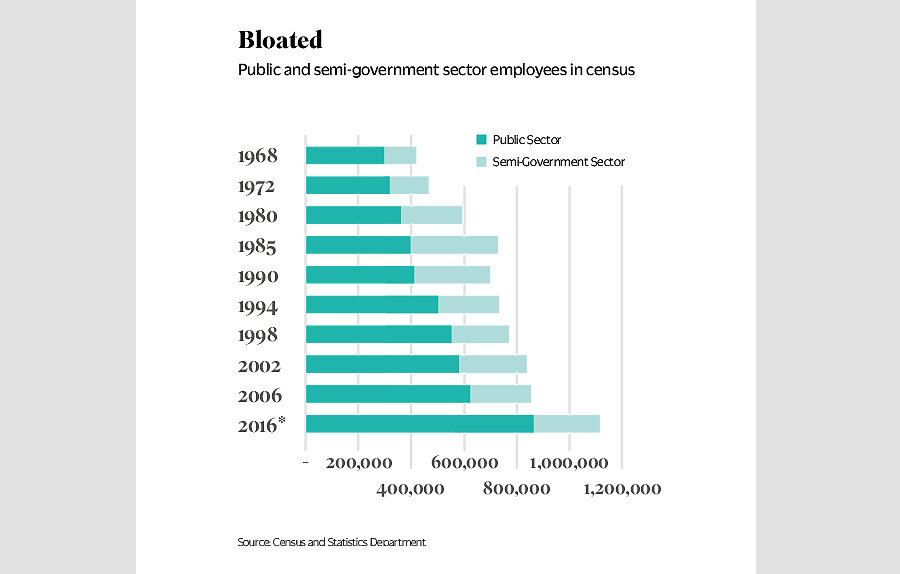
Why Sri Lankans aim low

The+Coordination+Problem+Logo.jpg

In this weekly column on The Sunday Morning Business titled “The Coordination Problem”, the scholars and fellows associated with Advocata attempt to explore issues around economics, public policy, the institutions that govern them and their impact on our lives and society.

Originally appeared on The Morning


By Dhananath Fernando

Over the years, a lot of weight has been put on building “aspirational Sri Lankans”. Different terminologies have been used to define them; however, the core group of the so-called aspirational Sri Lankans remains the same – “intellectuals”, “business professionals”, “young professionals”, and “members of professional movements”. The key question then is what makes aspirational Sri Lankans aspirational, and why have they been unsuccessful in placing Sri Lanka back on the map?

Where are our aspirations?

Many Sri Lankans aspire to build a house, buy a vehicle, and probably have a grand wedding and proceed on to provide a good education for their children. Achieving these aspirations continues throughout their lifecycle. Then, the next generation takes the baton and runs the same race. This is the constant marathon run by our “aspirational Sri Lankans” for decades.

The serious question we need to ask ourselves is why basic needs such as housing and transportation have become aspirations for the average Sri Lankan in the 21st Century. Moreover, attention should be given to the opportunity costs of obsessing over housing and transportation by these “aspirational Sri Lankans” – what could be achieved if this was not the case?

Why people consume capital by building a house

While it is true that the financial literacy of Sri Lankans is low and that we have failed at the formation of capital due to excessive consumption from our initial capital instead of investing, we also need to investigate the economic rationale behind such behaviour. The reason as to why basic needs such as housing have become a distant dream to the average Sri Lankan is deeply rooted in the distortion of prices in the housing market due to the implementation of misguided economic policies. Most of the construction material in Sri Lanka is far more expensive than the prices of the said material in the entire region. The total tax Sri Lankans pay for imported steel ranges between 19% and 64%.

The tax on imported tiles ranges between 19% and 93%, and at present, the Government has imposed a temporary import restriction on tiles and sanitaryware, driving the prices of local goods up. Anyone who has attempted to build a house would know how ridiculous the prices for light fittings, curtains, aluminium, and other material are. Sri Lanka also has a shortage of skilled labour, and finding a mason or a furniture craftsman is not only difficult but also expensive. They have become expensive on the basis of productivity. If you are wondering why Chinese labour has expanded beyond large-scale construction to small-scale residential construction, the answer is rooted in productivity. Chinese labourers are five times more productive (according to an in-depth interview conducted by the author with an apartment builder) than the Sri Lankan labourer.

High import tariffs and import bans have led to skyrocketing domestic prices, and now the simple transaction of buying or building a house has become a lifetime dream of the aspirational Sri Lankan. If you ask a banker for their reason for remaining in that job, they will tell you that it is the concessionary “housing loan’” and “vehicle loan” that attracted them. While a fortune will be spent on building a house, there will be limited funds to explore better education opportunities, hereby pushing the tertiary education of young professionals to the grave due to extra prices paid for inefficiencies in housing.

The existing land issues, the inability to transfer properties, and lack of property rights have made the situation worse. So in real terms, the “aspirational Sri Lankan’s” capital that they couldn’t invest for returns was not invested in their house, but rather in the extra price they paid for construction. More importantly, potential aspirational Sri Lankans are expending valuable energy in trying to overcome the consequences of these misguided economic policies.

Where is the capital for the vehicle?

It is no secret that Sri Lanka’s vehicle market is one of the most distorted markets. Based on the usage of the vehicle, the value increases, and we pay exorbitant amounts of tax at the point of importing a vehicle. Making things worse is the vehicle permit system that is only available to VVIPS and few professions.

So what is the incentive to be an aspirational Sri Lankan? Is it to take the risk of investing the capital and trying to consume from the yield, allowing the capital to multiply, while lobby groups and politically connected pressure groups not only get a vehicle permit but also the legal blessing to sell despite tax losses to the government?

The permit culture is not only in buying vehicles, but it is also in the public transportation system where route permits for public transportation are more expensive than the bus itself, even though the cost of a bus is multiplied several times over when you factor in the tax.

Yet again in the real world, the aspirational hardworking Sri Lankan’s capital, which they never invested (which they did not have the knowledge to invest), gets gobbled down in distorted markets that are protected from competition. 

Even when looking at leisure and recreation, the cost of recovering capital invested in the construction of a hotel is passed on as room rates at prices that are higher than those of similar destinations in the region, because of our high cost of construction. At weddings, the costs of the food they serve, electrical appliances, storage, and prices of cutlery, liquor, etc. are added to the final cost of a plate at a wedding. Hence, there is no alternative but to eat away at the capital that belongs to the average aspirational Sri Lankan. 

It is true many Sri Lankans get into this trap by trying to live beyond their means, spending lavishly at weddings, building bigger houses than they require, and buying vehicles due to a lack of financial literacy. But the reasons why artificial value has been created for basics such as housing and commuting is misguided economic policies.

What young entrepreneurs chase as aspirations are not the real aspirations that could put Sri Lanka back on the map. The very reason for this is that our prices do not indicate the true value of the product or service and the real value it offers. The concept of “price” is of paramount importance. It is the single indicator of value, resource scarcity, productivity, supply, demand, and so many variables that are all encapsulated in that single number called “price”.

When governments and policies intervene in demarcating prices, the price set is a result of people chasing the wrong things and the entirety of society has to bear the cost and loss of it.

What we need is to set a culture of hard work and free exchange where young entrepreneurs are provided with a level playing field, right incentive structures, and motivation to be productive and innovative – that is the real expectation of the aspirational Sri Lankan which has now been shadowed by glittery basics such as housing and buying a vehicle. Until we work towards that, we will not be able to see a new Sri Lanka nor will aspirational Sri Lankans ever prosper.


The opinions expressed are the author’s own views. They may not necessarily reflect the views of the Advocata Institute or anyone affiliated with the institute.

Why ‘banning culture’ is no solution

The+Coordination+Problem+Logo.jpg

In this weekly column on The Sunday Morning Business titled “The Coordination Problem”, the scholars and fellows associated with Advocata attempt to explore issues around economics, public policy, the institutions that govern them and their impact on our lives and society.

Originally appeared on The Morning


By Dhananath Fernando

Last week, the Government proposed a ban on sachet packets as a measure to protect the environment. And now, another proposal has been tabled – banning the slaughter of cattle. This is not the first time such strict measures have been imposed by consecutive governments, but it is paramount that we understand the economics and unintended consequences behind “banning”.

Before we jump to any conclusions, let’s just take a look at the results of similar policies adopted in the past, to get a taste of this “banning strategy”.

Previously, we saw a proposal to ban polythene below 20 microns in thickness to protect the environment and it was not too long ago when the former President announced a ban on chainsaws and carpentry sheds. A simple visit to the market is sufficient to demonstrate the extent these banning mechanisms have been productive.

Earlier this year, the Government learned a bitter lesson on imposing “price controls” (which is sort of a ban on selling at high prices) on tin fish and dhal. The price controls had to be revoked due to obvious market disruptions. Prices shot up, and there were shortages in the market, which was the complete opposite of what the Government intended.

A common belief is that the “banning strategy” often fails or is less effective due to poor implementation. This is far from the truth. There is very much a market and an economic dimension that show the concept in itself is flawed, which we often fail to understand.

Emotional policymakers often get the art of public policy drastically wrong. They view it through an accounting lens due to a lack of knowledge on human behavioural economics and the presence of the concept called “markets”. As a result, all good intentions result in far worse consequences.

Ban on sachets

The concept of sachets was introduced by FMCG (fast-moving consumer goods) market players on the basis of affordability and as a measure of resource allocation. Someone who cannot afford a full bottle of shampoo or any other equivalent product can use a sachet as a one-time useable product, based on the requirement. This is easy on customers’ wallets and provides value for money.

A good reason why sachets are predominantly available in general trade and mom-and-pop shops as opposed to modern trade is its easy access and affordability for the poor. On the other hand, from the manufacturer’s end, sachets help to allocate raw materials effectively and allow them to reach the market.

According to a recent article by Dr. Rohantha Athukorala, a Neilson Survey revealed that people have reduced the usage of baby soap by 18% and adult soap consumption by 17%. This indicates how people who find it difficult to manage their finances resort to eliminating basic hygiene products like adult and baby soap due to unaffordability. Cutting down on baby soap indicates a booming cost of living problem which goes beyond soap usage.

The ban on sachets will be a double whammy for most vulnerable people in society who are voiceless. All FMCG companies spend an enormous amount of money before they launch any SKU (stock-keeping unit), and we need to understand this was a market demand.

A sudden decision without prior engagement with the industry and relevant stakeholders will push manufactures to an extremely difficult situation, which will demand them to realign their manufacturing and marketing strategies in an already challenged Covid-19 economic environment. We have often forgotten that polythene is a wonderful innovation, and where its hydrocarbons are recycled to produce electronic chips and fabric.

MAS Holdings manufactured a special fabric for our cricket World Cup team with marine plastic waste which received global recognition. This can be utilised as an effective example to understand that the prime need is for setting up proper recycling methods coupled with incentives and disincentives.

Already, the discussion is heated on serious environmental concerns such as that of the Anawilundawa Wetland Sanctuary and many other places across the island, as highlighted through this column last week. The Government has to keep an eye on more macro issues pertaining to environmental protection rather than obsessively focusing on micro issues. These “banning strategies” will dilute the Government’s well-earned political capital, which will make hard reforms difficult in the coming years.

Import controls

Import controls are another form of ban on a temporary basis. The Government’s urgent need to manage its Balance of Payment (BoP) crisis is understandable. However, this requires a series of different actions coupled with temporary solutions such as bailout programmes from the IMF (International Monetary Fund) and clear policy decisions to help make our exports competitive.

Import controls hurt exports as the prices of import substitutes rise, especially where the goods are used as an input for the production of exports. In addition, import substitutes become more profitable to produce than exports.

The result of the current import ban is highly likely to affect our existing exports, as we have indicated in this column multiple times. Already, people are struggling to buy phone chargers, repair washing machines, and purchase goods which are required on a daily basis. We are running on existing stocks which will expire soon and prices have already started going up.

On the other hand, in our import bill, the big-ticket item is fuel and essentials such as pharmaceuticals, which are very difficult to control. The General Hospital has already announced a shortage of 70 essential drugs. These drugs are used to treat diseases such as Thalassemia and heart-related conditions.

However, trying to cut corners of other imports carry the potential to distort various other markets, businesses, and value chains horizontally, vertically, upstream, and downstream due to price hikes.

Prices of vehicle tyres and spare parts have shot up, which will have an impact on all goods and services with a transportation cost component. At one point, the collective effect of the rising cost of multiple consumable goods and intermediary goods may go beyond people’s affordability.

Releasing import controls at this point would be too late, given the situation of our currency. The higher cost of living will impact labour prices and most of our value addition in exports which are in the form of labour will be uncompetitive over a period, which will affect our main exports such as apparels, tea, and rubber products. In economics, the need is to take a look at the market from a holistic perspective. Otherwise, similar issues will arise over and over again.

The best example is higher prices requested by the poultry industry and the bakery industry. Sri Lanka’s maize production is not at all sufficient for domestic consumption, which is the main source of food for poultry. As a result of higher prices of maize, the prices of poultry products have shot up, which will have an impact on the bakery industry. Now you have a happy maize farmer but an unhappy poultry farmer and a baker. Eventually, this will translate to an unhappy consumer and a very unhappy voter.

Ban on slaughtering cattle

Adding to the banning spree, the proposed ban on slaughtering cattle is the latest. This may cause more damage rather than being helpful for the protection of cattle in Sri Lanka. However, the Cabinet Spokesperson mentioned the proposal was postponed by one month so as to allow for discussions with the relevant stakeholders.

Though the proposal may have been put forward with good intentions in terms of animal cruelty, India is a good example of how such policies don’t work. Cattle owners in India are left with no option other than to resort to the creation of illegal and unsanitary slaughtering houses and illegal markets.

Keeping aside the logical fallacy of placing a ban only on the slaughter of cattle and not the entirety of the poultry and meat industry, and the justification of leaving domestic demand to only be met through the importation of beef, the matter goes far beyond that.

The beef industry does not exist in isolation; our leather industry, dairy industry, and leather exports are also dependent on it. According to the Export Development Board (EDB), in 2016, about 1% of total merchandise exports consisted of footwear and leather products, which has now dropped to 0.6% of our merchandise exports.

According to the EDB, there are about five large companies, 10 medium-scale companies, and more than 1,000 small enterprises and seven tanneries that produce 25 tonnes of leather every day.

If passed by Parliament, this proposed ban on cattle slaughter will prevail at the expense of 1,000 small enterprises and exports worth $ 550 million. While animal cruelty is of grave importance, sometimes in life we have to keep some markets for the greater good and to avoid much greater negative impacts.

Banning newspaper info.jpg


The opinions expressed are the author’s own views. They may not necessarily reflect the views of the Advocata Institute or anyone affiliated with the institute.

Environment vs. development: It's all about land

The+Coordination+Problem+Logo.jpg

In this weekly column on The Sunday Morning Business titled “The Coordination Problem”, the scholars and fellows associated with Advocata attempt to explore issues around economics, public policy, the institutions that govern them and their impact on our lives and society.

Originally appeared on The Morning


By Dhananath Fernando

The question of how to develop Sri Lanka without obstructing our valuable environmental ecosystems has come to the forefront yet again. The recent incidents surrounding the development of a road in the territory of the Sinharaja Rainforest, a World Heritage Site, is one prominent discussion.

The deforestation in Haputale for cardamom cultivation and the establishment of a prawn farm in Anawilundawa, a Ramsar wetland, also raised serious concerns among the general public and environmental activists, adding more fuel to the debate on development vs. environmental protection.

This debate has come to a point where questions are being asked on whether Sri Lanka can be developed without disrupting the environment, and whether environmental activism is hindering the development of the country.

This is not the first time this topic had taken centre stage. “Save Wilpattu”, the Mount Lavina beach expansion project and the development of the Port City have been popular thematic stories over the years; the human-elephant conflict (HEC) is a continuous battle that gets primetime news coverage too.

What’s the real problem?

On the surface, it seems that all the incidents are a result of efforts to strike a balance between development and environment – which is true to an extent. However, if we dig a little deeper, in economic terms, it is a clear case of an attempt to maximise the utility of a scarce resource – “land”; at the same time, it is an issue of property rights.

And all that we’re seeing is an outcome of our inability to maximise the utility of land by improving productivity, alongside the absence of “property rights”.

Let me explain why and how.

Forests are sacrificed due to the absence of property rights

One of Sri Lanka’s most limited and precious resources is “land”; being a tiny island which is just a dot on the world map, land is not in abundance for us. Our size as a country is quite smaller than average cities or states in the rest of the world. Unlike other resources, land is fixed in size, and increasing the extent of land (similar to what was done with the Colombo Port City) is an extremely expensive affair, both monetarily and environmentally.

Sri Lanka’s total land extent is about 6.6 million hectares. Can you take a guess on the amount of land owned by the Government and the amount of land owned privately by its own Sri Lankan citizens?

Only about 18% (1.2 million hectares) of the land is owned privately by its citizens while about 82% (5.4 million hectares) of the total land is owned by the Government.

About 28% of our total land is forest cover, according to the FAO (Food and Agriculture Organisation of the US). Out of this, about 573,400 hectares (2,214 sq. mi.) of land is categorised as “Protected Nature Reserves”.

So in reality, the Government owns about half of Sri Lanka’s land (more than 50%), and this can be used for economic activity and environmental purposes. We should not be misled into thinking that private land is owned by anyone else other than our fellow Sri Lankans. In other words, many Sri Lankans do not have the rights to their property; they do not have deed titles; many of our fellow Sri Lankans do not have access to land, and the limited access some Sri Lankans have to government land is on a license basis.

According to news reports, a Sri Lankan has to visit 20 institutions just to get clearance (not to obtain a deed title) on land for cultivation on a lease basis. They have to take a licence from the government office if they are to cultivate on land owned by the government; as they do not own it, they have no incentive to use it sustainably.

As a result of agriculture, illegal settlements, and economic activity, the borders of forest land have always been blurred. It has been reported that usually, surrounding villagers and elite businessmen who have political and influential power encroach forest land for commercial purposes. Information reported on deforestation and obstructions on environmental ecosystems make up just a fraction of the ground reality. This is because most illegal deforestation takes place in obscure locations close to forest cover, which is difficult to track.

Inability to maximise on lands and its utility

The inability to protect our land and forest cover is a completely internal issue and of course a political football pertaining to a very sensitive issue. Whether we like it or not, the “market” works in good-case scenarios and worst-case scenarios. When Sri Lanka has a rising population with more households, and when people do not have land and property rights for agriculture or many more economic activities including housing and investments, what do you think would be the outcome if we fail to improve productive usage of land? For example, if we fail to improve the productivity of land by constructing vertical buildings, what would the outcome be if all five million households expect to build houses on 10 to 20-perch plots of land? The same applies to agricultural land, and this is one of the main contributory factors to deforestation across the globe.

According to the Economic Census in 2013/2014, about 2.2 million hectares were used for agriculture, an increase of 18% from 2002. It is obvious that in order to feed our population and sustain economic activity, our land usage has increased. However, we need to focus on improving productivity and efficiency by utilising it effectively for agricultural purposes if we are serious about protecting our forest cover. We have to move to high-yield varieties and vertical farming, and again, it boils down to accessing property rights if we were to increase the utility of land through investment. No person would invest in land they would not want to own. Unfortunately, most of Sri Lanka’s land is dead capital. No one uses it and there is no economic activity. Now, Sri Lanka expects to be self-sufficient in paddy, milk, maize, and vegetables and is aiming to supply the entire demand for rubber within the country. Sri Lanka is also aiming to expand coconut product exports by fewfold; where do we have the land to do all this? We need to take our land policy seriously or else we will put our forest cover into further risk.

President received firsthand information

The President received firsthand information on the gravity of the land issue. One of the main requests by the people or fellow Sri Lankans is for the Government to provide them with land.

His Excellency the President, in his policy statement, stated that land issues are one of his priority areas. Moreover, there were recent news reports on his directives to the relevant institutions to issue title deeds within three months which pertained to unresolved land issues.

Land issues are very sensitive, and all conspiracy theorists have a collective voice; they all suspect that foreigners and other parties may take over our land. However, since 1948, it’s been purely Sri Lankans who’ve owned the land. The responsibility cannot be passed on as it is our own leaders who control 82% of our land. (According to Sri Lanka’s regulations, there is minimal room for anyone who is not a legal citizen of Sri Lanka to buy land. Even the apartments and condominiums can be bought only if it’s above the fourth floor).

According to data, Sri Lanka lost about 490,000 hectares, or 20.9% of its forest cover, in just 20 years, from 1990 to 2010. If the majority of the land is governed by the State and if there is no room for any outsider to exploit our land, doesn’t this mean that we have really failed in our public policy and in understanding the economics of land management?

However, instead of looking inward, we have become masters of pointing fingers at outsiders and fearmongering to cover up our failure, and sadly, our forest cover has become the victim.

Many Sri Lankans do not have rights for their property or “Property Rights”. They do not have title deeds. Most of our fellow Sri Lankans do not have access to land and the limited access some Sri Lankans have t (1).jpg


The opinions expressed are the author’s own views. They may not necessarily reflect the views of the Advocata Institute or anyone affiliated with the institute.

Can industry-specific ministers fix this issue?

The+Coordination+Problem+Logo.jpg

In this weekly column on The Sunday Morning Business titled “The Coordination Problem”, the scholars and fellows associated with Advocata attempt to explore issues around economics, public policy, the institutions that govern them and their impact on our lives and society.

Originally appeared on The Morning


By Dhananath Fernando

The appointment of cabinet ministers and state ministers is still a topic at dinner tables, especially on the state ministerial portfolios. This is mostly because specific industries or fields have been provided for state ministers. There is general criticism surrounding ministers being appointed to micro sectors of the industries while the general expectation from a minister is to serve a broader mandate, and do justice to taxpayers’ money by formulating and implementing policies.

Many critics question the role a minister could play in a comparatively small industry where the designing, production, marketing, and distribution are mainly done by the micro-entrepreneurs themselves. For example, the state ministerial portfolio for Batik, Handloom Fabrics, and Local Apparel Products has been a topic of discussion since the appointments. Another state ministry that is being widely discussed is that of Cane, Brass, Clay Furniture, and Rural Industry Promotion.

The counterargument is that previous state minister portfolios were just token positions with no decision-making power. It is argued that in this case, ministers have been provided a specific role, scope, and focus, and people can directly hold them accountable for their industries and industry-related concerns. At the same time, a measurable key performance indicator (KPI) can be easily implemented and the respective and relevant institutions can be assigned to each minister. According to a recent TV interview by President’s Secretary Dr. P.B. Jayasundera, state ministers and their teams led by the ministry secretary have been given the decision-making power in that respective industry. According to Dr. Jayasundera, it is a scientific way of structuring and utilising taxpayer money without just appointing state ministers for the sake of doing so.

I believe there is truth to both arguments on the method of assigning the ministerial portfolio. The ground-level reality is that most of these assigned domestic industries are run by micro, small, and medium entrepreneurs (MSMEs) or businessmen who represent the private sector. It is important to remember that these small businesses are still part of the private sector and not the Government. The Government’s role is more to regulate some industries and facilitate the business processes because micro and small enterprises have industry-specific challenges as well as common challenges in running their daily operations. The minister’s role is to work with these sectors and assist them with reducing regulatory barriers for the sector to perform to its full potential.

Common challenges

According to the Advocata Institute’s report “Barriers to Micro and Small Enterprises” in Sri Lanka, one main bottleneck across all industries is access to finance. Access to finance has multiple dimensions extending to the banking and financing sector, but it starts from the fundamental point of business registration.

Over the years, we have underestimated the potential of micro and small enterprises (leaving the medium enterprises aside). We have provided step-motherly treatment to the MSME industry to the extent of not even focusing on their ability to register their businesses.

According to the Advocata report, sole proprietorships comprise about 61% of total businesses in Sri Lanka and provide 27% of national employment. Interestingly, about 25% of the establishments are run by women and contribution from women-led enterprises increases up to 35% in rural areas.

While the whole country focuses on the big picture of revamping the entire domestic and specialised sectors such as batik, local apparels, handlooms, pottery, rattan, etc., our research has revealed that about 45% of micro-enterprises and 10% of small enterprises have not even obtained a basic business registration. The meaning of not having a business registration is that they do not have access to finance or any Government-sponsored programme or project.

Poor enthusiasm for business registration is mainly a result of the horrendous process of registering a proprietorship or partnership. A proprietorship or a partnership can be registered under the Business Names Ordinance Act No. 7 of 1987, which is under the authority of each provincial council and provides room for each provincial council to run their own procedure on registration of a proprietorship or partnership.

So even though a specific minister may have been given scope and specific task of revamping micro, small, and local enterprises, the minister may still face challenges due to common regulatory barriers starting from the business registration process, which is the entry ticket, to finance and markets, and even for relief schemes during Covid-19 brought in by the Government.

The good news is the Government and Department of Census and Statistics (DCS) have initiated an e- registry platform for registering micro and small enterprises. According to Advocata statistics, 97% of micro-businesses and 85% of small businesses are registered as sole proprietorships. This e-registration system is indeed a move in the right direction. Then, the authorities must also ensure that the e-registration process will be simple and not a replication where the same documents are just submitted online. A system of just submitting documents such as deeds, rent agreements, etc. online would add an additional burden for budding entrepreneurs; to scan and submit documents online in addition to the time they spend getting grama sevaka certificates, rent agreements, and a list of other documentation. Advocata has recommended the New Zealand model and a South Korean model where there is a three-step business registration process, while in Sri Lanka the current process has seven steps.

Daily survivors vs. entrepreneurs

Having a simplified business registration process is the first step of addressing the problem of access to finance and providing government assistance and accessing markets. Having a simple business registration process will ensure an effective tax collection system where businesses can grow and expand.

One other reason for the poor enthusiasm pertaining to registering a business is in the fear of paying taxes. As a result, most of these micro-businesses limit themselves to being “daily survivors” as opposed to them becoming real micro and small “entrepreneurs’’.

There is a significant difference between someone who just runs a small business for daily survival and someone who takes a risk in the form of money, property, time, or any form for entrepreneurship.

What Sri Lanka requires is for micro and small entrepreneurs to migrate from “daily survivors” to micro-entrepreneurs. The Government can facilitate the process by having a conducive environment for businesses, and the new state ministers can take this lead.

Industry-specific challenges

While the micro and small enterprises have been oppressed at the registration level, at the same time, there are industry-specific regulatory issues.

Most of these industries require a license for their sourcing and a license or a government authorisation that has to be taken at each touchpoint. In most industries, sourcing of raw material and transportation of raw materials both require licences. Some of the regulations are placed with good intentions, but most of it has ended up with extra bureaucracy burdening the industry and opening doors to corruption. All licences have just ended up being another hurdle for these entrepreneurs to cross. Additionally, these licences are also an opportunity for regulatory officials to earn extra money in the way of corruption and by providing preferential treatment to the affluent and higher classes of business that have networked with local political power centres.

The new industry-specific ministers’ primary mandate when developing these industries has to be a facilitatory role and not an interventionist role. The prosperity of micro and small enterprises will depend on this. The new ministers have to ensure that they do not apply the “brakes” by introducing more regulatory barriers; rather, they should remove those barriers in each sector for sustainable growth.

At the same time, they should not push the accelerator in the wrong direction to create market distortions which will impact other more productive sectors while bureaucratic powers work only thinking about their sector at the expense of others.

Sri Lankans are more than capable of competing at the global level and “daily surviving micro and small businesses” will jump to the seat of “micro and small entrepreneurs” if we facilitate and provide a more simple regulatory scheme.

We should never underestimate the common man’s skill and the ability of micro and small enterprises, which at present are already contributing more than 30% of our national employment.

Newspaper info.jpg


The opinions expressed are the author’s own views. They may not necessarily reflect the views of the Advocata Institute or anyone affiliated with the institute.