
policy

It is not a weak rupee, it is weak policy

By Dhananath Fernando

Originally appeared on The Morning

At the end of March, the Sri Lankan Rupee was trading at around Rs. 310 to the US Dollar. By the week before 21 May, it had moved to around Rs. 321–326. On 21 May, the exchange rate moved sharply, fluctuating between Rs. 331 and Rs. 348, before settling again at around Rs. 328–330.

Many looked at this movement and concluded that the rupee was getting weaker. But the exchange rate, by itself, is not the best indicator of whether an economy is performing well or badly. A currency can move for many reasons. What matters is whether the movement reflects market fundamentals or policy mistakes.

In this case, the recent rupee movement tells us less about the weakness of the LKR and more about the weakness of our policy environment.

Market signals

One clear example came from the data shared at a recent press conference by the Deputy Minister of Finance. According to him, after the surcharge on Customs duty for vehicle imports, vehicle-related Letters of Credit (LCs) dropped to about $ 4 million a day. However, one day after the surcharge announcement, the value of LCs opened for vehicle imports was $ 88 million.

That means one policy announcement created 22 times the normal daily demand for dollars in a single day.

The surcharge was announced on 15 May. Whether intended or not, it signalled to the market that dollars were in short supply. When markets receive such signals, they do not wait patiently. Importers rush. Businesses panic. Anyone planning to open an LC tries to do it before the next restriction arrives.

The additional demand was not only for vehicles. It likely spilled over into other non-perishable imports as well. That sudden dollar demand put pressure on the exchange rate. Within a week of the vehicle import surcharge announcement, the pressure became difficult to manage, and the Central Bank reportedly had to release around $ 200 million from reserves to calm the market.

The story did not stop there.

On 24 May, loan-to-value ratios were imposed on vehicles and gold. Again, the signal to the market was obvious: the authorities were worried about dollar demand. But the bigger issue was left untouched.

Impact of policy uncertainty

More than 20% of our import bill is fuel. Yet we continue to delay proper fuel price adjustments. In effect, we are subsidising fuel while burning the hard-earned gains of the primary balance. The failure to adjust fuel prices has now spilled over into vehicle imports, gold loans, and eventually monetary policy.

There is also a revenue contradiction here. The Government earns far more tax revenue per dollar spent on vehicle imports than on many other imports. Vehicles are taxed at around 120% on average, one of the most extreme border tax structures in the world. So when we slow down vehicle imports while failing to address fuel pricing properly, we reduce dollar demand in one place but also lose a major source of Government revenue per dollar spent.

Then came 26 May. To contain demand and absorb excess liquidity, the Central Bank increased policy interest rates by 100 basis points. Given the liquidity conditions, the move was understandable. The market had excess liquidity, and the Central Bank had already been absorbing rupees through repo operations.

But the broader point is this: the reluctance to make the politically difficult decision on fuel prices eventually pushed the burden onto interest rates. What began as a fiscal and pricing problem became a monetary policy problem. The Central Bank then had to do the unpopular job.

On 9 June, another measure followed. The mandatory conversion period for exporters’ foreign currency earnings was reduced from 90 days to 30 days.

This will not build confidence. It will erode whatever little confidence remains.

Exporters will now have even stronger incentives to delay bringing money into Sri Lanka, keep funds offshore for as long as possible, or structure transactions in ways that reduce exposure to forced conversion. That is not because exporters are unpatriotic. It is because policy uncertainty changes behaviour.

Fixing the fundamentals

When we look at the sequence of decisions, the problem becomes clear. The reason for the rupee pressure and the tools used to address it did not match. The pressure came from panic, excess liquidity, fuel pricing failures, and poor policy signalling. But the response was a mix of import surcharges, credit restrictions, higher interest rates, and forced exporter conversion.

This is not a weak rupee story. It is a weak policy story.

The next episode is easy to predict. Exporters will be accused of keeping money offshore. They will be blamed for not bringing dollars into the country. They may even be treated like traitors responsible for the currency movement.

But this is deeply unfair.

For years, we have said exports must grow. We want exporters to bring in dollars. We want them to compete globally. We want them to diversify Sri Lanka’s economy. But what have we given them in return?

We have made exports difficult through para-tariffs, labour regulations, land issues, high energy costs, policy uncertainty, and a generally unfriendly business environment. At the same time, the Ministry of Industry runs special credit schemes for exporters. The Export Development Board takes part in international exhibitions to find new markets. We talk endlessly about export growth.

And after all that, our final policy response is to tell exporters: bring your dollars back faster and convert them within 30 days instead of 90.

This is not how confidence is built. This is how confidence is destroyed.

The exchange rate is only a price. It reflects the demand and supply of dollars. But behind that price are expectations, confidence, policy credibility, and market behaviour. When policy becomes unpredictable, people protect themselves. Importers rush. Exporters delay. Consumers speculate. Banks become cautious. The currency then reflects that uncertainty.

So the real problem is not that the LKR is weak. The real problem is that our economic policy environment is weak.

A strong currency cannot be built on weak policy. It has to be built on predictable rules, market confidence, fiscal discipline, realistic pricing, and an export-friendly economy.

Until we fix those fundamentals, blaming the rupee will not help. The rupee is only telling us the truth.
Tariff reform vs. the high-tariff lobby

By Dhananath Fernando

Originally appeared on The Morning

There was a recent news story that the Government is considering a new tariff policy. That may sound technical. It is not. It goes to the heart of how expensive life is in Sri Lanka.

A tariff, in simple terms, is a tax imposed by a government on goods imported from another country. The definition is straightforward. The system is not.

Millions of products cross borders every year. In Sri Lanka, each of these items is taxed at different rates at the point of entry. Every product that crosses the border is classified under what is known as an HS Code – the Harmonised Commodity Description and Coding System developed by the World Customs Organization (WCO).

At the global level, goods are identified using a six-digit code. Countries can then add additional digits to create more detailed classifications. That is where complexity begins. With eight or 10 digits, categories become narrower, rates become different – and discretion enters the system.

There are generally two types of tariffs. The first is an ad valorem tariff – a percentage of the value of the good. For example, a vehicle may be taxed at 20% of its declared value. The second is a specific tariff – a fixed amount per unit, such as a certain number of rupees per pair of shoes or per kilo of cement.

Not all tariffs are created equal. In principle, tariffs discourage trade. Governments justify them either as revenue measures or as tools to protect domestic industries. But when tariffs become excessively high, they stop being revenue instruments. They become barriers. Products simply do not enter the market because, after taxes, they are no longer affordable.

The type of tariff also matters. A specific tariff can disproportionately hurt lower-income consumers. Imagine a flat Rs. 500 tax on a pair of shoes. A pair worth Rs. 1,000 faces a 50% tax. A pair worth Rs. 30,000 faces less than 2%. The burden falls heavier on those buying lower-value goods. That is not progressive policy; that is distortion.

Sri Lanka’s deeper problem, however, is structural. We have operated for decades with a highly complex, cascading tariff system. Multiple rates across thousands of HS codes. Para-tariffs layered on top of Customs duties. Different treatment depending on how a product is classified.

Complexity creates discretion. Discretion creates room for corruption. When tariff rates differ significantly between similar HS codes, the official determining the classification holds enormous power. A small change in classification can mean a large difference in tax payable. That gap becomes fertile ground for rent-seeking.

But that is only one side of the story.

The real push for high tariffs does not primarily come from customs officials. It comes from vested interests within the private sector.

There are companies in selected industries that mainly serve the domestic market. If cheaper or better-quality imports were allowed to enter freely, many of these firms would struggle to compete. Instead of improving productivity or innovating, they lobby for protection.

Construction materials are a clear example. Tariffs in some segments go as high as 70% or 80%, often through para-tariffs such as Commodity Export Subsidy Scheme (CESS) and Ports and Airports Development Levy (PAL).

Over time, the high-tariff lobby has become highly organised. It operates almost like a cartel. It finances political campaigns across party lines. It frames the narrative around ‘saving dollars’ and ‘protecting local industry’ while consumers quietly pay the price. Many of these protected industries function as monopolies or oligopolies, operating in near-cartel structures with limited competition.

To further entrench protection, many of these products are placed on what is known as the ‘negative list.’ Even when Sri Lanka signs a free trade agreement, items on the negative list are excluded from tariff reductions. In effect, the agreement becomes hollow for those sectors.

The proposed new tariff policy seeks to address this. It is expected to introduce a simplified structure, perhaps four tariff bands such as 0%, 10%, 20%, and 30%, and to remove para-tariffs like CESS and PAL. If implemented properly, this would be one of the most significant trade reforms in decades.

But reform in Sri Lanka is never a straight road.

Lobbying groups typically use three tactics to dilute such reforms. First, they demand long phase-out periods of three to five years, arguing that the industry needs time to adjust. In practice, those years allow political pressure to build and reforms to stall.

Second, they push to expand the negative list, adding more items under protection so that even with a simplified tariff structure, meaningful competition never materialises.

Third, they invoke anti-dumping measures to reintroduce barriers through another door, effectively recreating protection under a different label.

Many governments have attempted tariff reform. The fact that we are still debating simplification after decades is itself evidence of how strong vested interests are.

Moving towards a four-band tariff system and eliminating para-tariffs is commendable. But it must be done decisively. Without expanding the negative list. Without excessive phasing. Without hidden backdoors.

Every delay strengthens cartels. Every compromise keeps prices high. And every year of hesitation quietly squeezes consumers, especially the poor, by denying them access to affordable goods and better living standards.

Tariff reform is not a technical adjustment. It is a test of political courage. The question is simple: do we design policy for protected producers, or for the broader public?

The answer will determine whether Sri Lanka remains a high-cost economy trapped by interests or becomes a competitive one driven by opportunity.

Milking the tax system

By Tormalli Francis

Originally appeared on the Morning

  • Why VAT exemptions sour the market

A Value-Added Tax (VAT)-free litre of milk or cup of yoghurt may feel like relief at the checkout, which is in fact a silent distortion of lost revenue, stifled competition, and a marketplace where not all producers compete on an equal playing field.

The Government’s VAT exemption on locally produced milk and yoghurt is presented as a move to improve child nutrition and support local dairy farmers. On the surface, it appears humane and sensible; after all, what government wouldn’t want to make nutritious food more affordable while reducing dependence on imports?

But public policy, like milk, can curdle if left unchecked.

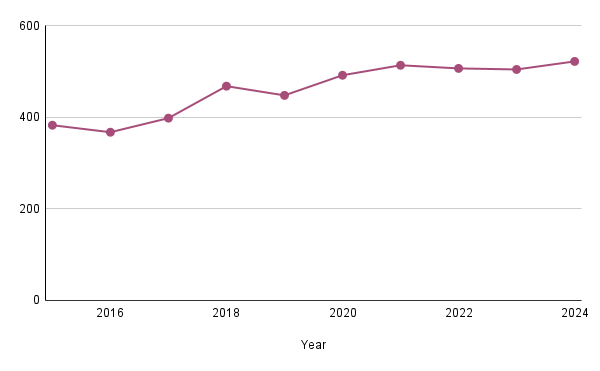
Milk production in Sri Lanka is a long-standing traditional industry that has endured for thousands of years, producing over 500 million litres of milk annually (Figure 1), with more than 130,000 farmers (Figure 2) contributing to the production of milk islandwide.

Yet this exemption, packaged with its good intentions, highlights a recurring policymaking problem in the Sri Lankan economy: sacrificing long-term efficiency for short-term optics. In reality, VAT exemptions, however well intentioned, often distort the tax system, weaken the fiscal base, and may ultimately harm both consumers and the very farmers they are meant to protect.

Equal tax, equal opportunity

In a sound tax system, neutrality is essential; similar goods should be taxed in similar ways, and the system should not favour one product or producer over another.

Exempting only locally sourced milk and yoghurt breaks this principle. It grants preferential treatment to domestic producers, while imported milk powder, which is still a staple in many urban Sri Lankan households, remains subjected to VAT. This selective exemption can hinder fair competition, discourage innovation, and misallocate resources, ultimately compromising market efficiency.

This distorts market dynamics. Producers of other dairy products such as cheese, butter, and especially curd face a cost disadvantage, not because of inefficiency but because of policy. The exemption becomes a de facto subsidy, not through open direct Government expenditure but through hidden distortion in the tax system.

A country case example of a similar situation is seen in Georgia, where VAT exemptions apply to domestically produced milk and dairy products but not to imported or reconstituted alternatives. While intended to support local farmers and consumers, this approach creates an uneven competitive environment. Producers who rely on imported inputs including those making value-added dairy products face rising costs without benefiting from the exemption.

Such policies also break the VAT chain, as inputs are subjected to VAT and outputs are exempted. This raises production costs, especially for downstream manufacturers, distorts price signals, and leads to inefficient resource allocation across the sector.

Undermining revenue for reform

In the context of Sri Lanka’s fiscal challenges and commitments to international financial institutions like the International Monetary Fund (IMF), it is important to broaden the tax base.

VAT exemptions reduce potential Government revenue, which could otherwise be allocated to essential public services or targeted welfare programmes. Maintaining a wide array of exemptions complicates tax administration and undermines efforts to achieve long-term fiscal sustainability.

When tax revenue is eroded by such sector-specific exemptions, this shifts the burden elsewhere – either to other goods or services or to Government borrowing. Sri Lanka is in a period of fiscal crisis, with IMF-backed reforms requiring revenue generation. Exemptions reduce tax income from a high-volume essential product, limiting funds for healthcare, education, or infrastructure.

Ad hoc policy changes and weak tax administration have been the major contributors towards the decline in tax revenue, which have brought in fiscal challenges. A well-developed tax system is an efficient revenue instrument, but exemptions and reduced rates erodes its performance.

Basic commodities such as milk and yoghurt are often the options for exemptions or reductions in most Low-Income Developing Countries (LIDCs). In 2020, the VAT exemptions in these countries amounted to 1.3% of GDP. Revenue loss from such policies tends to outweigh the actual gains for the vulnerable groups.

Better tools for better targets

A key justification for exemptions on milk and yoghurt is to improve nutrition and support dairy farmers by making these products more affordable for vulnerable groups and increasing farmer incomes.

The dairy industry has been identified as the priority sector for development among the other livestock sub sectors in the country for its crucial role in reducing nutritional deficiencies across all age groups, and serving as a key source of affordable, high-quality nutrition for the population.

But VAT exemptions are an imprecise way to deliver support. While they aim to make basic commodities more affordable, such blanket policies often result in an imbalance, as higher-income households benefit more than the intended low-income groups.

A greater proportion of basic commodities are consumed by the richer households with greater purchasing power as they are likely to capitalise on these tax breaks. This misalignment highlights the inefficiency of VAT exemptions as a tool for social welfare. It is, in essence, a regressive subsidy disguised in the language of progressivism.

With exemptions having a progressive impact, they are poorly targeted ways to help low-income households, showcasing that directly targeted mechanisms will be better tools to address distributional concerns.

If the goal is to improve nutrition among the most vulnerable and improve farmers’ livelihoods, Sri Lanka should focus on strengthening targeted, transparent support systems. Direct transfers to low-income households, investment in school milk programmes, input subsidies to farmers, and upgrading the dairy industry infrastructure would deliver an efficient and equitable alternative.

These measures ensure that support reaches those who need it most without distorting market signals or undermining long-term efficiency.

Not a structural solution

Sri Lanka’s VAT exemption on locally produced milk and yoghurt may feel like a compassionate move, and in some ways, it is. But ultimately, it’s a fiscal quick fix, not a structural solution. A neutral tax system with broad based rates and minimal carve-outs helps maintain fairness, supports productive specialisation, and sustains Government revenue.

If we want to nourish our economy as well as our children, we must move from tax distortion to targeted policy. Milk can be good for the bones, but only when it doesn’t weaken the backbone of the economy.

(The writer is a Research Analyst at Advocata Institute)

(The views and opinions expressed in this article are those of the author and do not necessarily reflect the official position of this publication)

Figure 1: Trend of total annual local milk production (million litres) – 2015-2024

(Source: Livestock Statistics, Department of Census and Statistics)

Figure 2: Number of dairy farmers by district – 2024

(Source: Livestock Statistics, Department of Census and Statistics)